Many Paths to Financial Empowerment
SEED Winnipeg provides practical financial supports that help Manitobans access benefits, manage money, build businesses, and work toward greater financial security and opportunity.



Written by: Nolan Bicknell
Photo credit: Ian McCausland Photography
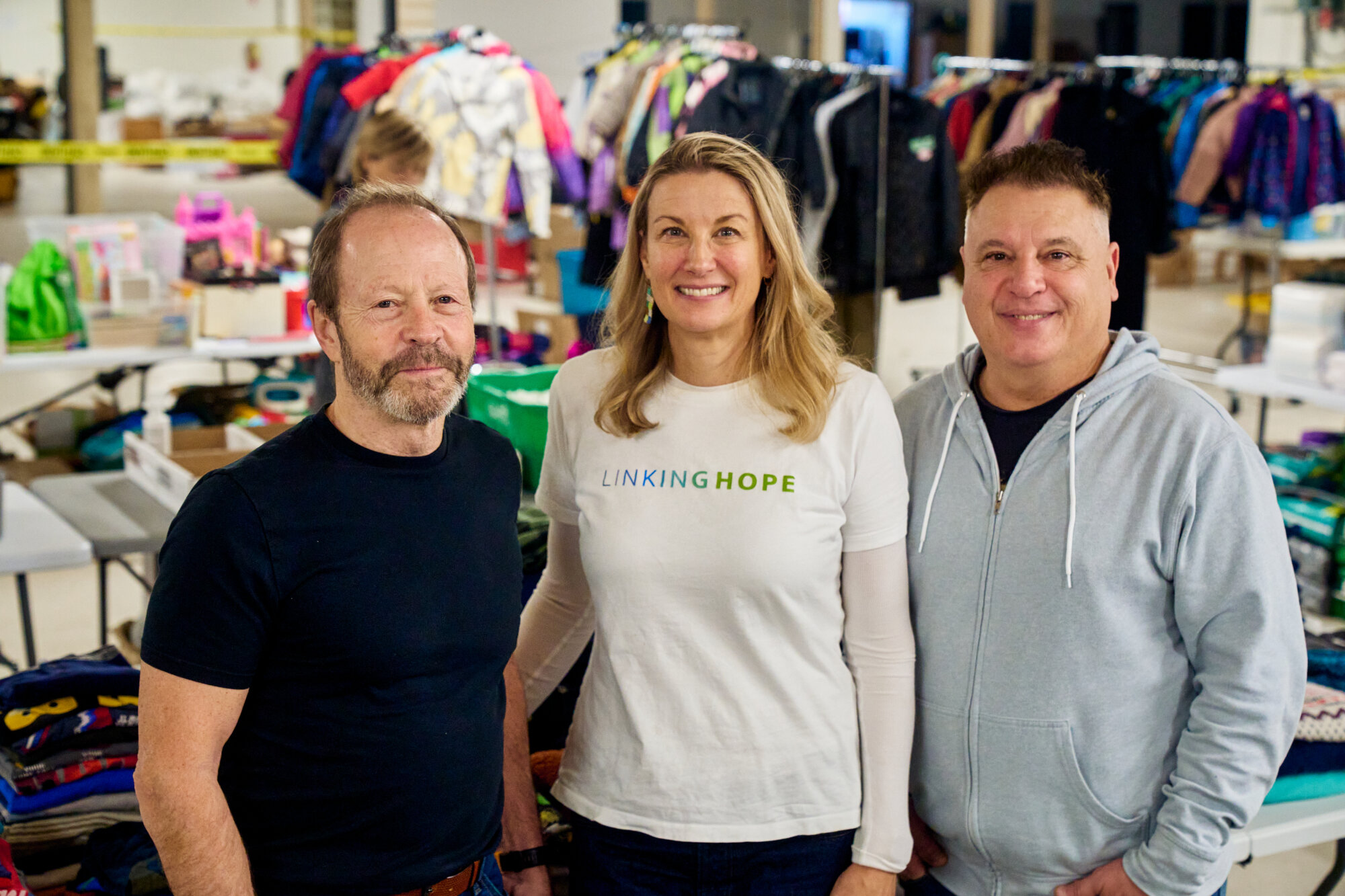
When the pandemic shuttered offices and emptied streets, Kristie Pearson’s garage filled with necessities for our city’s most vulnerable. “I sat down at my computer, sent out a mass email to my contact list . . . and before long, my garage was filled with items that were needed by community,” she recalls. Neighbours began dropping off essentials, and agencies began picking them up. “We were actually sending out almost 10 trucks a week,” Pearson says. Out of that organized chaos, Linking Hope was born.
Pearson is Board Chair, President, and Founder of Linking Hope, an organization that serves as a bridge between businesses and individuals in need. They acquire, sort, and deliver surplus goods, from clothing and hygiene items to household essentials, to community members and organizations in need.
Charitable organizations come “weekly, sometimes twice a week, and collect what they need,” Pearson says. While they’re here, “you’ll see they’re talking to each other, they’re figuring things out.” Their space is “a little hub of activity,” with teams from frontline serving organizations like Holy Names House of Peace and DASCH, volunteering alongside other crews made up of Rotary clubs, churches, and synagogue groups. The partner list now includes over 90 organizations in Winnipeg and a growing network of northern communities, with support from Assembly of Manitoba Chiefs, Southern Chiefs Organization, Manitoba Métis Federation, Manitoba Keewatinowi Okimakanak, and Rotary connections that help move goods into fly-in communities. The scope is vast, and the need is immense.
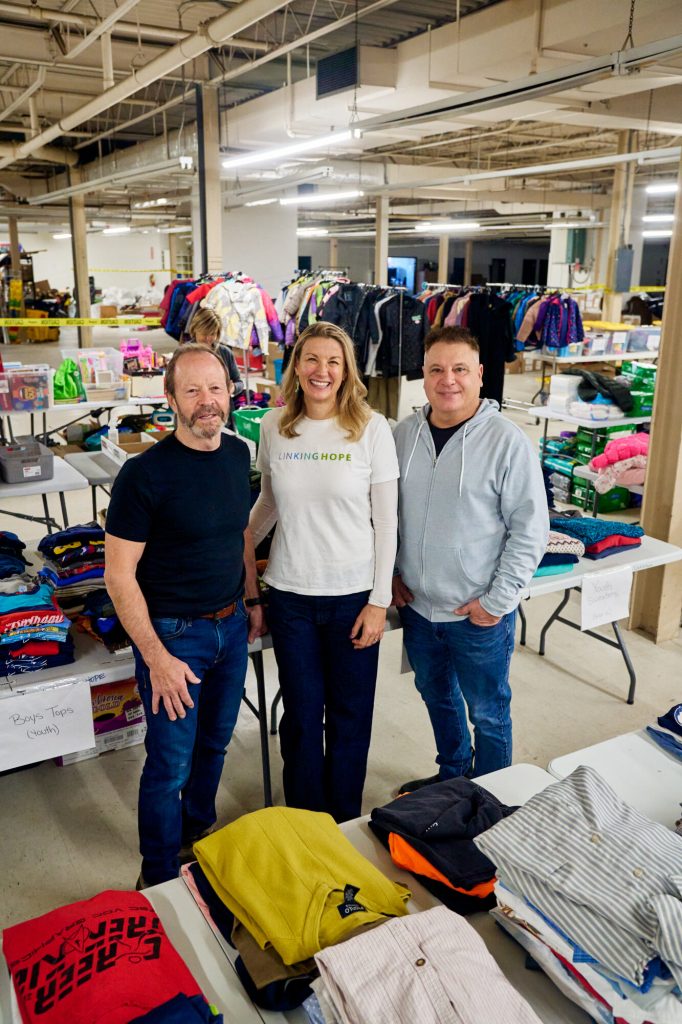
The model is simple: match surplus items to those in need, quickly and respectfully. Sometimes it’s rescuing returns from the landfill. Sometimes it’s coordinating donations from private businesses. Oftentimes, that means creative matchmaking, like finding a new home for hundreds of sets of medical scrubs. “We found a number of immigrant groups that work with health-care centres and seniors’ homes,” Pearson explains. “It made a big difference for them.”
“There’s well over 500 mattresses we’ve redistributed in the last year.” Sometimes it’s pure joy, like the day a wholesaler called after Mother’s Day with 200 unsold bouquets. “We delivered them to all the agencies for their frontline workers . . . the excitement on their faces was just a real joy.”
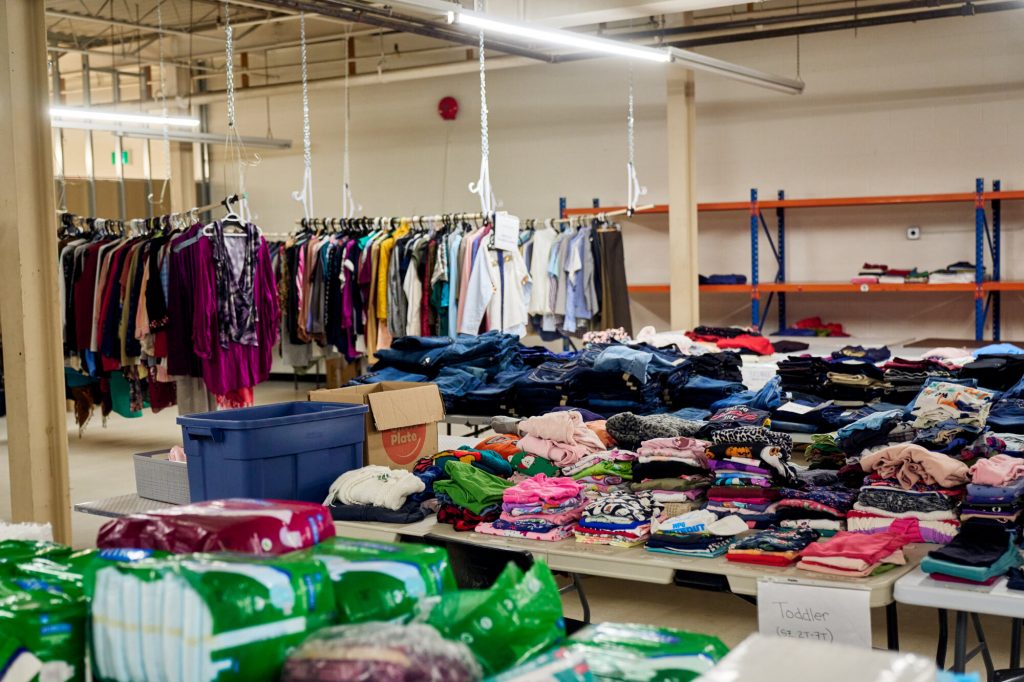
Volunteers for Linking Hope provide their time and talent, with a wide array of necessary tasks to keep things running smoothly.
“There are simple, easy jobs that you can do to make a difference,” Pearson says.
Sorting and folding, removing tags from new items so they can’t be returned, running deliveries. Talent matters too: “an electrician who helps with the building; a computer expert for our website; moving companies; a guy with a truck; knitters who bring huge loads of hats.” And if Linking Hope isn’t the right fit, the team will connect you where you’re most useful: “We can match you with an agency that works well for you.”
Increasingly, those connections run both ways, especially when it comes to hiring people from the community. “A big part of Linking Hope is making sure we have lived-experienced folks, folks from within our community that are also part of the organization. It’s portrayed differently when you have somebody with a true understanding,” says Pearson. “I don’t ever claim to say that I have a true understanding, I am a very privileged human, but there are folks like Tara that works with us, and others here that have that lived experience, and they’re able to guide our decisions and how we do things, by giving me a perspective I would never know and never see.”
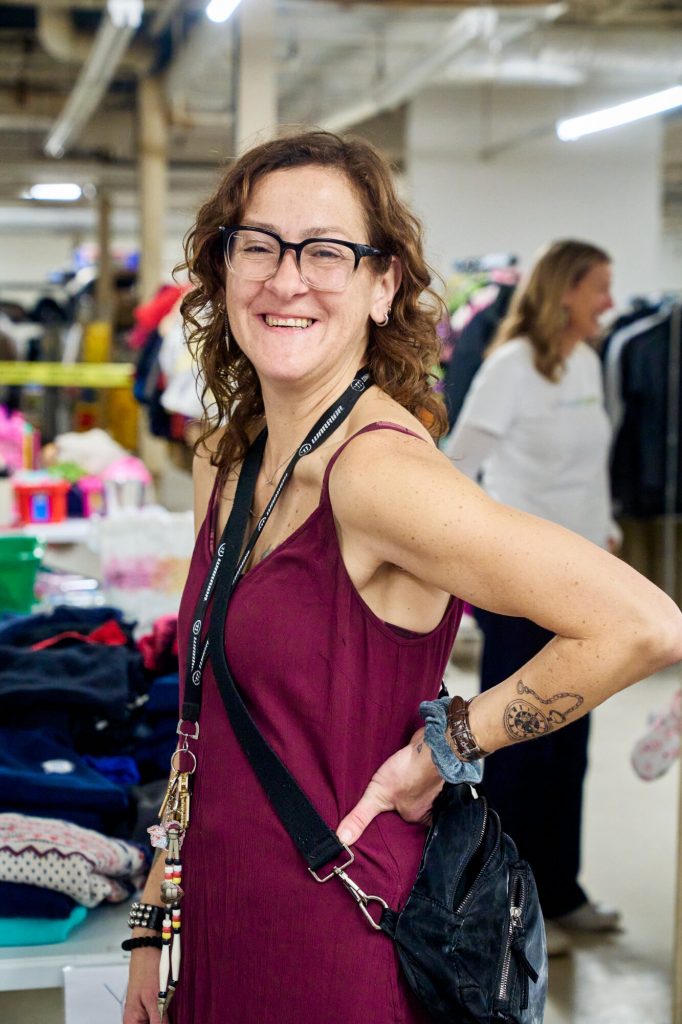
Tara Bell, a volunteer coordinator with Linking Hope, embodies that reciprocity.
“Last summer, for the first time in my life, I found myself homeless. I was a single mom . . . I had a couple of careers and a mortgage, and unfortunately just a bad turn of fate, and I ended up homeless.”
She lost her housing and, just as painfully, lost her community around the same time. Staff invited her to a community volunteer walk: “I was on the front line here and just wondering why I was still here . . . . They had this community volunteer walk . . . so they invited me to go out and walk with them. And I did, just to get out of my head.”
Volunteering two or three times a week became a lifeline for Bell. After volunteering for a couple months while also staying in a shelter, she was hired to help with donations, first on a part-time basis and eventually full-time. In the shared building, she met Lawrence “Spatch” Mulhall, one of Linking Hope’s Founders and a staple within the non-profit sector. He recognized Bell and asked her if she’d consider joining Linking Hope.
Bell’s story captures why lived experience isn’t just valuable, it’s vital. She knows exactly what a warm coat means on a cold night, because she’s been in that position. “I live with my own mental health, and there are days I think, ‘I don’t know if I want to go to work,’” she says. “But I work in donations, and I look outside and it’s cold, and I think, well, all the relatives are gonna be cold. I gotta go to work, and I gotta try to find them sweaters.”
That memory fuels a deep sense of empathy and is a powerful motivation. “I’ve slept outside,” she says quietly. “I’ve slept in the shelter. There were times I didn’t feel safe enough to be in the shelter . . . and I was sleeping under bushes.” Her purpose, now, is “a reason to get out of bed in the morning, besides a paycheck.” She calls it a calling. “Now I feel like I’m gonna spend the rest of my life giving back.”
Her presence also challenges how our neighbours and relatives on the margins are perceived. “It’s very easy to dehumanize people who are homeless,” Bell says. “There were times I was walking with my backpack and I had people in trucks yell at me, ‘Get a job’ . . . . You have no idea.” She wishes more Winnipeggers would be a little bit more compassionate and take the time to listen and understand someone’s story before judging them.
Her reminder is simple: “People are just people . . . . Everyone has a story.”
Inside Linking Hope, Bell says, that spirit is the atmosphere. “The vibe here is phenomenal. It’s infectious,” she smiles. “Sometimes I feel like I’m struggling, like I’m going against the tide . . . . And then I get up here and it’s like, oh, this is the place where they give back. I feel like it recharges my batteries.”
She saves special admiration for the way Pearson and the team use their networks for good. “I just think it’s so great that . . . these are folks that may have some sort of privilege in their life, but they are taking time to tune into what’s going on in the world around them, in a real way, and to take time and energy and give to people,” Bell says. “I have nothing but respect for that.”
Linking Hope is part of a broader housing-plus approach. The team equips suites so move-ins feel dignified, and they stand alongside families who are stabilizing, like a mother recently reunited with her kids. “If we can keep supporting her to make sure that she makes it, she’ll be able to break that cycle for that next generation.”
The winter months are busy, with plenty of activities and partnerships established. Linking Hope joins the Downtown Community Safety Partnership for a winter walk to gather essential items and distribute them directly to people who need them. They’ll host a large holiday table at a community gathering. Pearson hopes Winnipeggers can help provide some of the basics on their lists: mitts and gloves, socks and underwear and hygiene items as well as winter coats, blankets, and toques.
Linking Hope is a chain of care that builds connection, one conversation, one delivery, one volunteer, and one warm coat at a time.
“We need to come together as a community. Look at the humans, and humanize. Look a person in the eyes and realize that person could be somebody you know,” says Pearson. “It doesn’t take much for a smile, and to hand someone some socks.”
For Bell, that small gesture can be the moment that turns someone’s day, or life, around. “When they helped me get off the street, and they gave me that hand up I needed . . . the sense of gratitude I carry is amazing,” she says. “All I want to do is just give back . . . in any way I can.”
To connect with Linking Hope visit linkinghope.ca
Stories