

JUMP Math helps Manitoba teachers address COVID learning loss
When pandemic lockdowns forced schools into the virtual realm in 2020, teachers like Naomi Dennie struggled to keep students engaged during math lessons.
“We couldn’t play together during COVID,” Dennie says. “We couldn’t get together in groups, and discuss, and think out loud, and you know, talk about each other’s thoughts and progress.”
When classes returned to in-person, Dennie noticed that some students lacked foundational numerical skills. Today, Dennie is one of many Manitoba teachers seeking ways to address learning gaps driven by the COVID-19 pandemic. In November 2022, she started using JUMP Math to help students who had fallen behind. Founded in 2002 by Canadian mathematician, John Mighton, the program offers innovative math resources to help teachers and students bridge these gaps.
“Honestly, it’s been really game-changing,” Dennie says. “It’s like everything I need at my fingertips—the resources, the games, the explanations (and) even the practice books.”
Thanks in part to a grant from the Winnipeg Foundation, the JUMP Math curriculum is helping students across the city boost their mathematical confidence and develop essential numerical skills.
Founder Mighton was once among the many children who struggled with math. He says it took him 30 years to develop the confidence to study math, and eventually pursue a doctorate in the subject.
“I wanted to help kids so they didn’t feel the way I did, help them realize their abilities,” Mighton says. “I started the tutoring club at first, and then that grew, and we started placing students in schools. Then we realized we’d have more impact if we worked with teachers and gave them good material and training.”
That idea set the foundation for the JUMP Math program. Compared to the traditional mathematics curriculum, JUMP Math focuses on giving students confidence through skill building and by introducing incrementally challenging concepts.
“JUMP has a more radical view of equity than, I think, any other program I’m aware of,” Mighton says. “You need materials that make all kids feel equal. To do that though, you have to have very well-scaffolded lessons. You have to know how to deliver the math in meaningful chunks that kids can understand, where they can make discoveries, explore them, but with some guidance.”
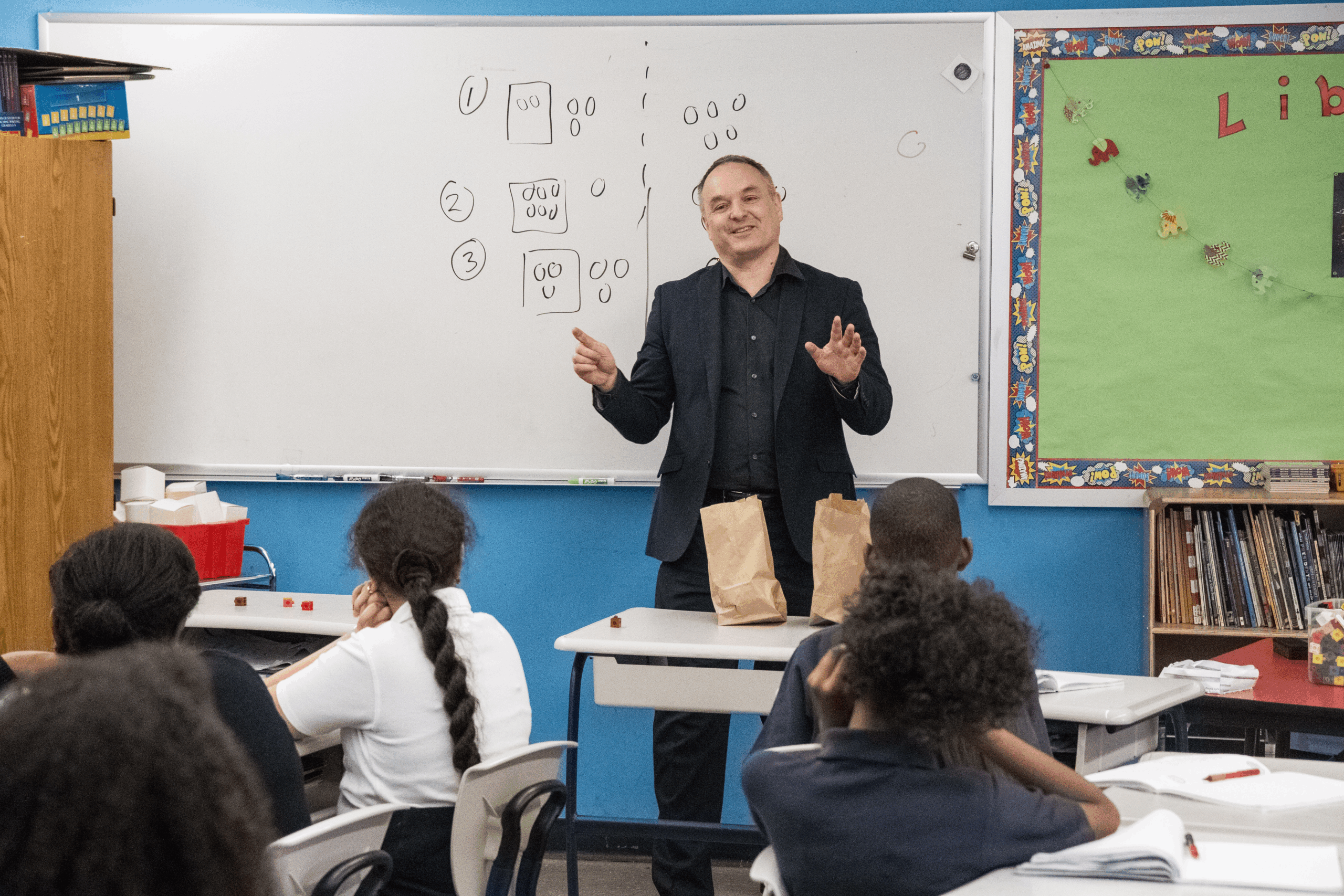
A typical JUMP Math lesson always includes a lot of questions, asked by both teachers and students. Every few minutes, students are quizzed to ensure the entire class understands the concepts. To keep kids interested and engaged, interactive games are sprinkled in between lessons.
As an educator, a lot of Dennie’s time is spent developing lesson plans, in addition to helping kids meet their independent learning goals. Now, with access to JUMP Math’s materials, she has more time to connect with students on their progress.
“It has everything laid out for you, whereas the regular curriculum is very traditional… it tells you what kids should know, but it doesn’t tell you how to teach that, necessarily,” Dennie says. “Instead of creating a PowerPoint, and doing all of that work, I can just focus on the specific instruction and the specific needs.”
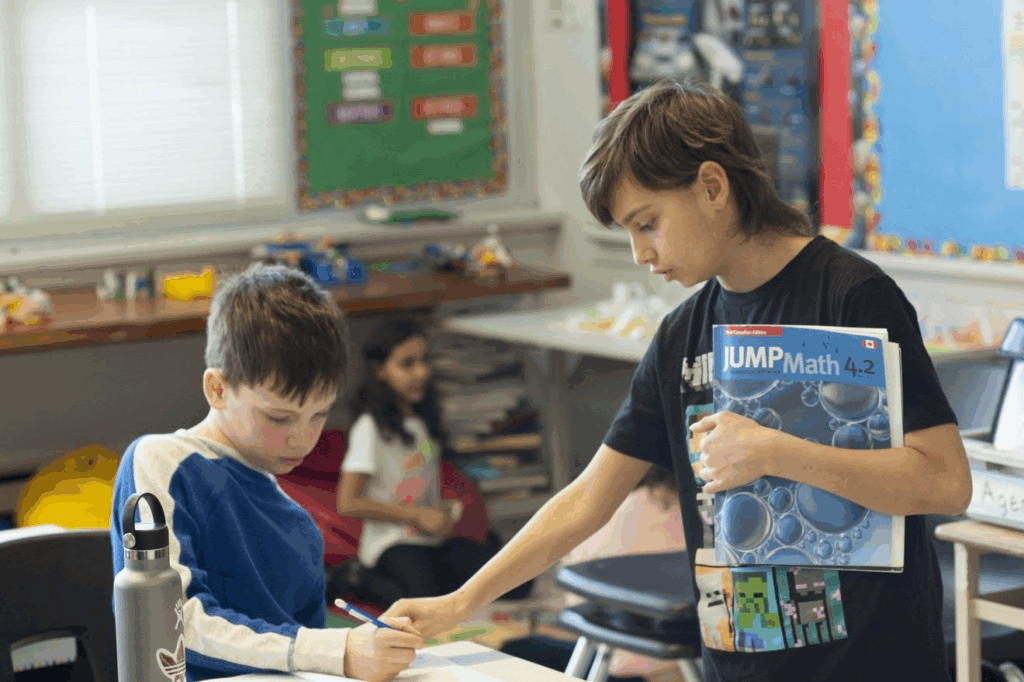
In the years following pandemic lockdowns, Dennie found it difficult to know where to start to address learning loss. With a focus on skill mastery, she says the JUMP Math curriculum has helped her students build mathematical fluency through interactive lessons, games, and group work.
“Before I used JUMP Math, I was struggling with teaching basic counting,” Dennie says. “The foundational skills just weren’t there for those kids. Now that we’re kind of out of COVID and everything, JUMP really likes to play a lot of fluency games, and a lot of games that helped to culminate the skills we have just learned.”
Mighton believes there are three things that teachers must do to help bridge learning loss gaps—and says JUMP Math can help.
“You have to go to the right level, you have to build their confidence and help them get engaged and focused, and then you have to gradually increase difficulty,” Mighton says. “Those are really three things you need to do to address learning loss, and those are built into the program.”
For Dennie, a surefire sign that the JUMP Math program is working is the sheer number of kids asking for homework.
“These kids are literally so excited about doing math now that they want to continue doing it for homework,” she says. “Everyone’s on the same playing field, everyone is doing it together, and they’re all finding that success.”
Of course, it’s not just students who are benefitting from the program. As a teacher, JUMP Math has given Dennie the confidence and reassurance that she’s setting her pupils up for success.
“It’s a really successful way for kids to feel like they’ve got it, they understand. It just makes me feel so much better as a teacher,” Dennie says., but they’re so far away,” says Froese. “When you can connect people to something that is right here, right in our backyard, it hits a little differently. It’s real.”

Photos – courtesy of JUMP Math