Healthy Body, Healthy Mind, Healthy Choices
Through connection, stability, and ongoing support, this Winnipeg organization is helping people rebuild their lives and move toward a healthier future.



By: Kevin Rollason
Photo credit: Lake Winnipeg Research Consortium
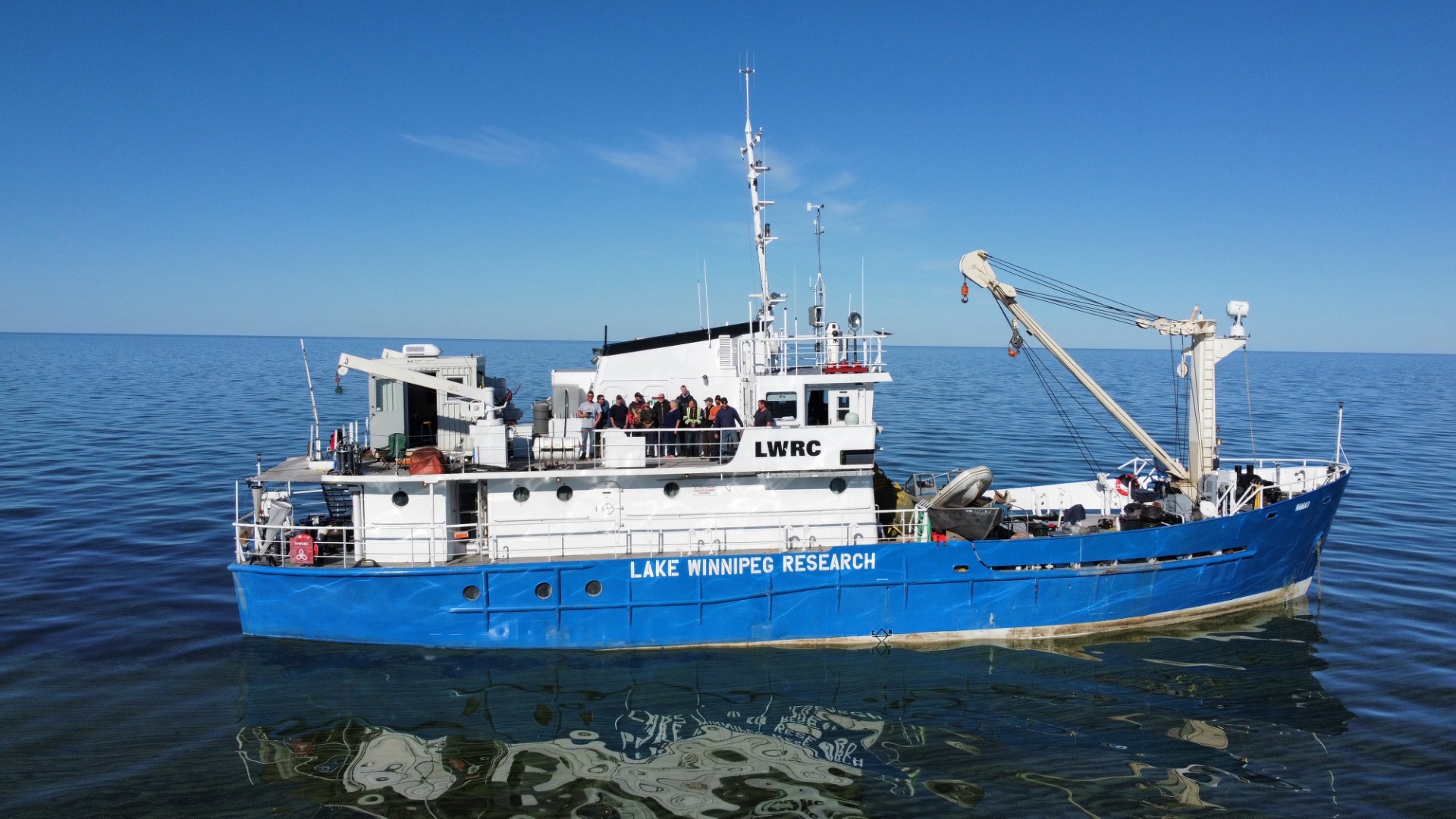
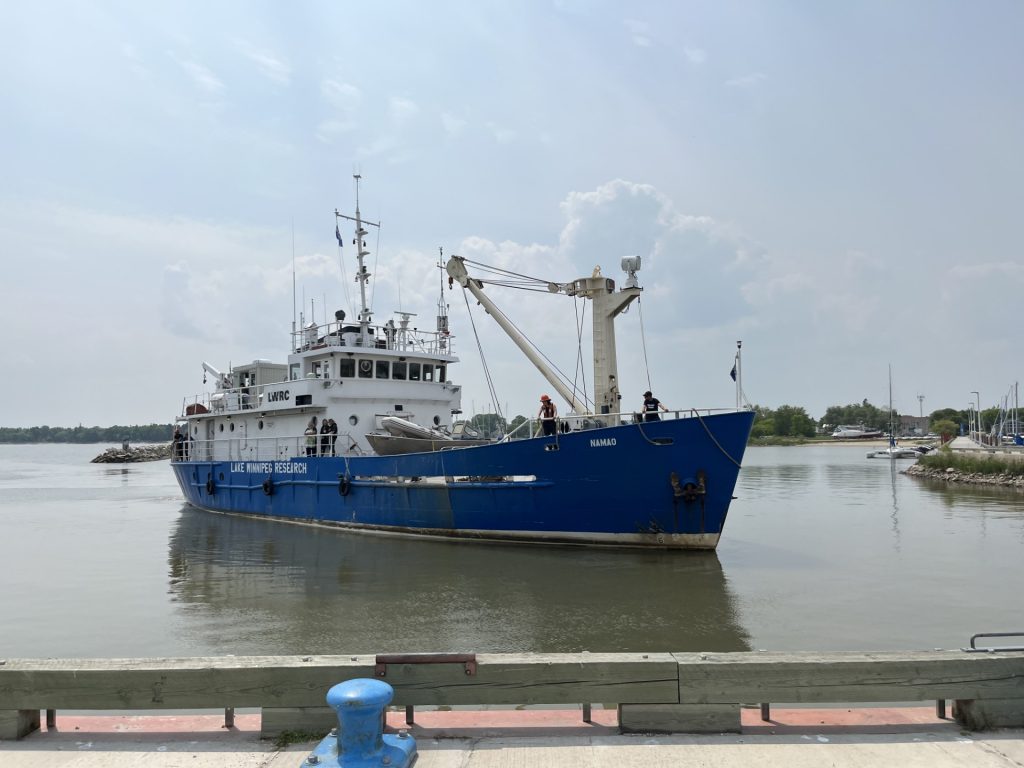
The MV Namao has long served as the backbone of the Lake Winnipeg Research Consortium’s (LWRC) decades-long effort to monitor the health of one of the world’s largest freshwater lakes.
Now, thanks to the support of The Winnipeg Foundation, the vessel is well positioned to continue that mission far into the future. A $55,000 grant was provided to help fund the installation of new generators on the 51-year-old ship, an essential upgrade that will keep it operating reliably for years to come.
Ryan Johnson, the LWRC’s superintendent of vessel operations, said “the ship’s engines were successfully replaced in 2021, and updating the generators was an important next step as both were the originals from 1975.”
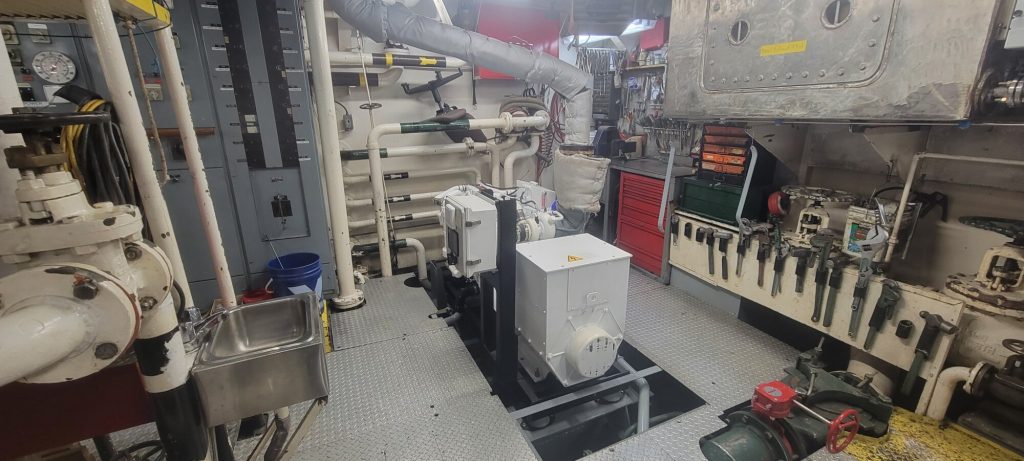
These systems power everything onboard, from lighting and navigation to communications and propulsion, ensuring the MV Namao remains fully equipped to support vital research on Lake Winnipeg.
Julia Patrick, the LWRC’s executive director, said “We were able to get some funding from the federal government in 2025 to purchase these new generators, but we needed funding to install them.” That’s when the Foundation came on board with its gift, allowing the LWRC’s team to begin the hard work of taking out the old generators. “The new ones are a lot smaller and a lot lighter while the originals were heavy and large,” Patrick said. “They had to take it out in pieces –— it was quite the process.”
“Then they cleaned the entire area, repainted the entire area, then brought in the new generators and installed them. And, once they got installed, then we had to hire electricians to come.” The work began at the end of last year’s research season in October and is just finishing in time for the upcoming one.
“It is very exciting,” Patrick said. “The support of The Winnipeg Foundation made it a reality and a success to install these generators. Now the Namao is ready to go for another 50 years. It has new engines, new generators, and we are constantly looking at ways to continue to make it sustainable and efficient, while ensuring we meet Transport Canada’s requirements every year.”
The ship, built in Riverton in 1975, began its life as a Canadian Coast Guard craft, assisting boats in distress on Lake Winnipeg and putting out and recovering navigational buoys. In the wake of the 1997 Flood of the Century on the Red River, the LWRC was founded in 1998 to conduct research on the effect of that flood on Lake Winnipeg. At about the same time, the federal government was looking at disposing of the ship after privatizing its Aids to Navigation program.
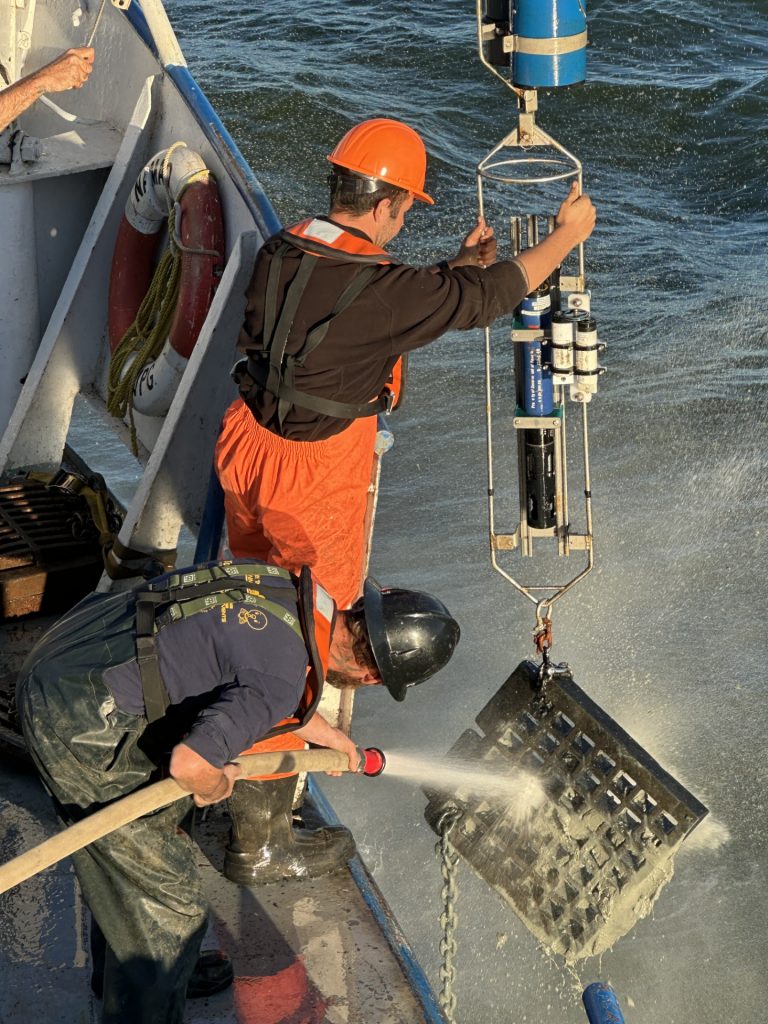
The LWRC, spearheaded by the late Dr. Allan Kristofferson, a former Freshwater Institute fisheries biologist, made an agreement with the Coast Guard to operate the Namao for science research.
A trial survey was carried out in the summer of 1999 and, after being found to be beneficial, a further agreement was made for the Coast Guard to operate the Namao again in 2001, for three more annual surveys, until 2005 when the LWRC took ownership of the vessel. Since then, every spring, summer, and fall, the Namao has carried a nine-member crew and up to seven researchers across the lake for three-week expeditions.
Today, more than 30 agencies, including government, university departments, municipalities, businesses, and other organizations are members of the LWRC. A few include Manitoba Hydro, the City of Winnipeg, Centre for Indigenous Environmental Resources, Manitoba Environment and Climate Change, Red River Basin Commission, and Norway House Cree Nation. Patrick said this collaborative approach has produced an extensive body of data. “Now they look at trends and see how the lake has changed and potential areas of concern,” she said. “One year of research doesn’t tell a whole lot, where 20 years is starting to show different things and allow our partners to be able to use that research to help support lake and watershed management decision making.”
“One year of research doesn’t tell a whole lot, where 20 years is starting to show different things and allow our partners to be able to use that research to help support lake and watershed management decision making.”
Riley Versluis, the LWRC’s science field coordinator, said the organization plays an important and unique role in “bridging a long-standing gap between the scientific community, policymakers and the public.”
Versluis said the continuing research includes the monitoring of algal blooms and water quality, and the tracking of aquatic invasive species such as zebra mussels, rainbow smelt, and spiny water flea.
“Researchers have also examined microplastics in the lake, while a new project we are developing is looking at atmospheric deposition, a fancy term for looking at how particles in the air enter the Lake Winnipeg ecosystem” he said.
Versluis, who is from rural Manitoba, started on the ship as a master’s student at the University of Winnipeg. He said what attracted him to take on his master’s project with the Consortium was to help raise awareness of the work the LWRC does by making the science more accessible to the general public. “You don’t always realize how much specialized knowledge you’ve gained,” he said.
As public engagement and science education coordinator, it’s Lauren Beauchamp’s job to communicate the science conducted by the LWRC to the general public in a meaningful way.
“Our education programs aim to reach youth of all ages,” Beauchamp said. These include its flagship Lake Ecology Field Program which offers half-day excursions in Lake Winnipeg’s south basin to students from Grades 8 to 12 and in university. Students are able to get hands-on experience sampling and analyzing the lake’s ecosystem with research-grade sampling equipment.
“We also offer various summer day camps where children take part in lake science with the same scientific equipment used on the Namao or go on the ship itself while it is in harbour,” Beauchamp said. “We are really trying to get more awareness out there about what’s going on, what we’re doing and where to find information. We want to give more information to the public which is easier to digest.”
Versluis said he is glad the LWRC has the Namao because studying a lake the size of Lake Winnipeg is not only challenging but could be dangerous without a vessel of its size. “The MV Namao provides a critical platform that allows whole-ecosystem studies to be conducted safely, efficiently and cost-effectively,” he said.
Stories