Many Paths to Financial Empowerment
SEED Winnipeg provides practical financial supports that help Manitobans access benefits, manage money, build businesses, and work toward greater financial security and opportunity.



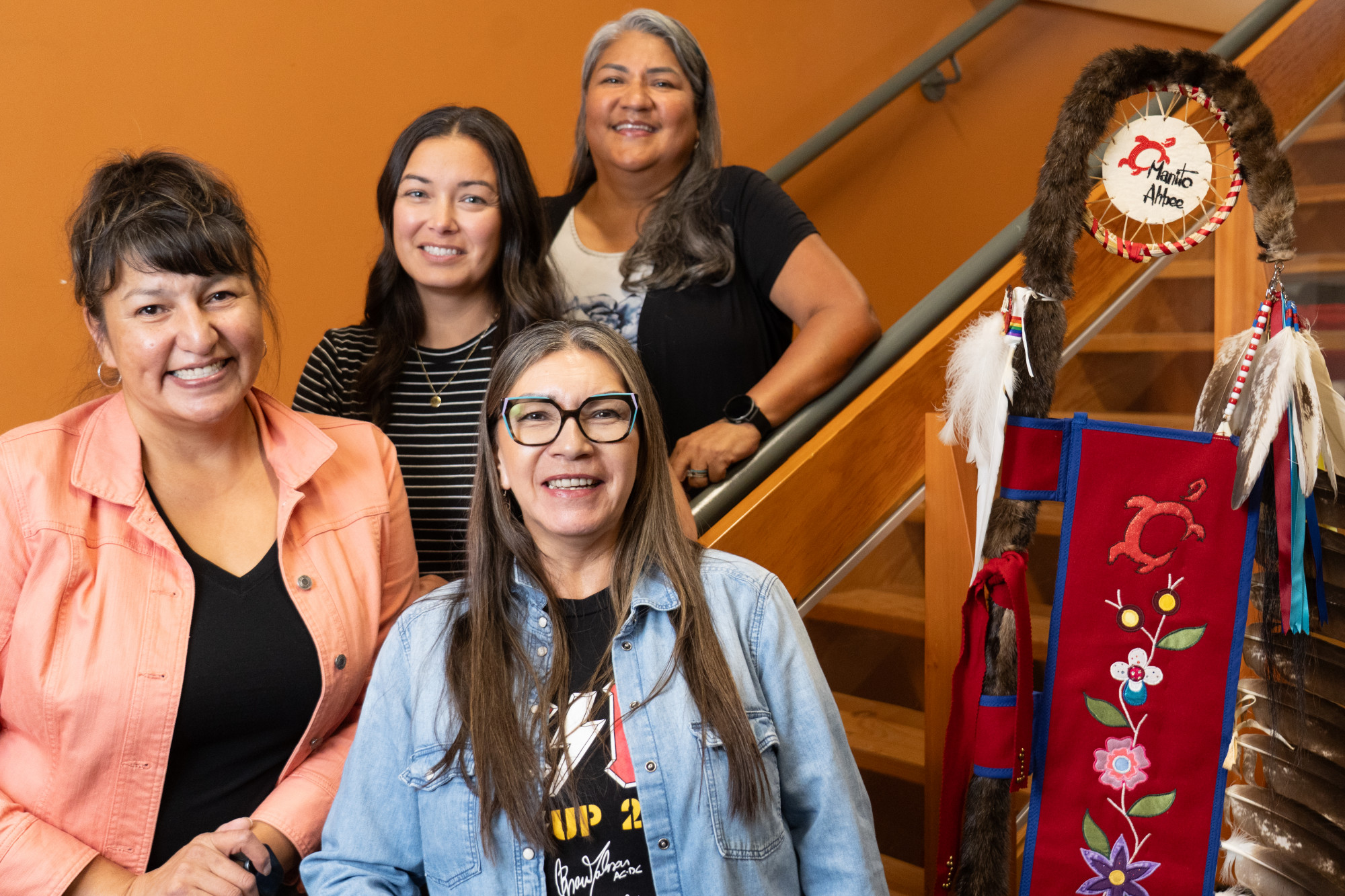
When the Manito Ahbee Festival begins, the first presence people feel is spirit.
Songs, dancing, ceremony, and the gathering of Nations are all part of a festival built around culture and spiritual safety.
“I’ve always been taught when you make a lodge, you have to do it out of love,” says Lisa Meeches, executive producer of Manito Ahbee Festival. “That goes for a Sundance Lodge, whether that’s a teepee lodge, whether that’s a sweat lodge, or that’s the Manito Ahbee Lodge.”
For over 20 years, Manito Ahbee Festival has brought people together in Manitoba to celebrate Indigenous culture, language, ceremony, art, and community. Through the festival, people can learn about the distinct Nations, languages, songs, art forms, and cultural practices represented in Manitoba and beyond. Manito Ahbee continues to create opportunities for people to learn about Indigenous culture through the teachings of Elders, Knowledge Keepers, artists, dancers, singers, and youth.
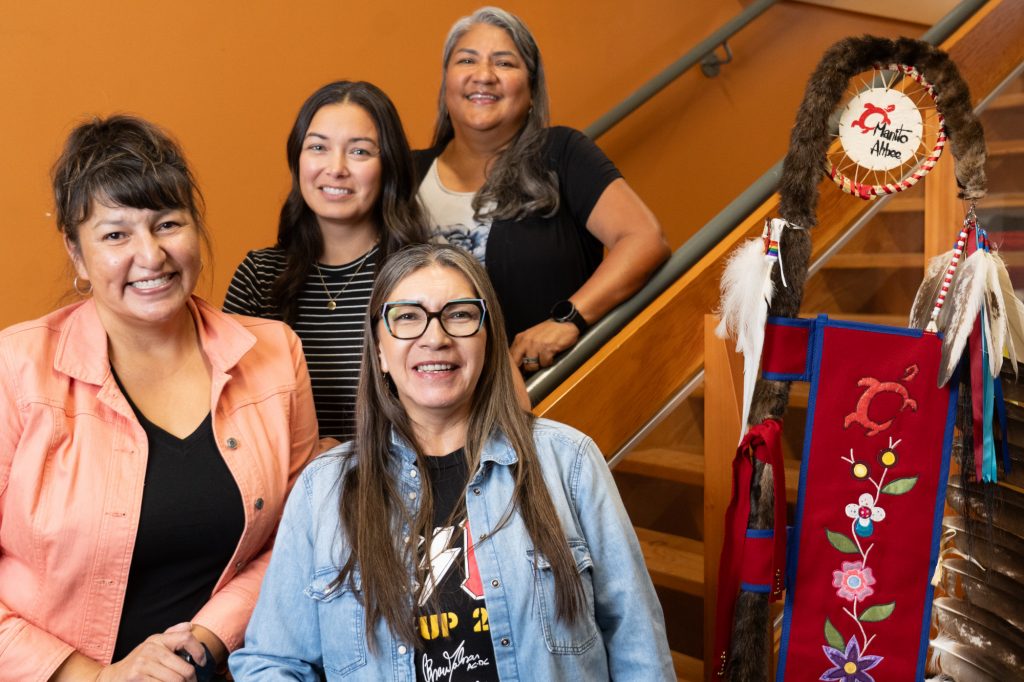
“Our name, Manito Ahbee, means where the Creator sits,” says Suzanne Mayham, Finance Administrator. “We’re right at the centre of Canada.”
As Meeches recalls, the origins of Manito Ahbee came from a simple request:
“When the Juno Awards were first awarded to Winnipeg, I think it was 21 or 22 years ago, we were asked to create a space and a platform to honour the Indigenous artists that were nominated,” she says.
The first gathering honoured those artists at the Burton Cummings Theatre, with a ceremony that later became part of the national broadcast. Meeches says the group saw an enormous amount of Indigenous talent across music, dance, storytelling, film, television, and other disciplines that had not been given enough opportunities or platforms.
“We saw this migration coming fast,” she says. “It was like a tsunami of talent that was so untapped.”
The early conversations with elders, community leaders, creatives, and youth shaped what Manito Ahbee would become.
“With all those voices in the room, that’s how Manito Ahbee was created,” Meeches says. “It was a festival for all Nations. It still is a festival for all Nations today.”
Meeches says the festival helps people understand the diversity of Indigenous Nations in Manitoba.
“If you’re ever in attendance at Manito Ahbee, you’ll leave understanding the different Nations that live in Manitoba, and all the Nations that visit and contribute to the festival,” she says.
“Every Nation beads differently,” Meeches continues. “Every Nation sings differently and sounds different when they dance.”
The festival also invests in the next generation through Sacred Hoop, a youth mentorship program focused on cultural performance, production, and project management. The program helps young people build practical skills in areas including contracts, budgeting, scripting, stage management, show planning, and production. Participants can carry those skills into the festival and into their own communities.
“Having our youth, our Sacred Hoop, they bring a whole new energy to Manito Ahbee Festival,” Meeches says. “They give their young minds’ twist on how to teach those Seven Teachings.”
That mentorship is also part of Manito Ahbee’s succession planning. Meeches says training people to carry the work forward has always been an important part of the festival.
“When you go to any Sundance or any lodge, there’ll always be one or two people being trained to take over that lodge,” Meeches says.
Today, young people are actively involved and learning from those who came before them, helping ensure the festival continues for future generations.
“I hope that in 20 years, it’s still a gathering place for people to come,” Mayham says. “I’m so confident that we’ll still be here in 20 years because we have so many good people helping and supporting the festival.”
Still, producing Manito Ahbee takes significant resources. A four-year, $600,000 Multi-Year Grant from Winnipeg Foundation provides $150,000 in stable funding each year, helping the team plan and focus more of its time on developing and delivering the festival.
“It helps us concentrate our time and effort to other things: in developing, in doing the festival, not fighting for our survival,” Mayham says.
Stable funding gives staff more time to plan, develop programming, mentor young people, and deliver the festival.
For those who have never attended, Mayham’s invitation is simple:
“Come with an open heart, to learn, to see the dance, come and hear the songs,” she says. “You will leave with respect and understanding when you’re done with Manito Ahbee.”
The team encourages first-time attendees to learn, see the dancing, hear the songs, listen, and take in the experience. If people leave with a better understanding, they say, the festival has done part of its work in sharing culture and creating learning opportunities. Meeches says that feeling cannot be fully explained from outside the circle looking in.
“I need you to be there because I can’t explain that feeling that you feel when you’re in the audience,” she says.
“The minute the eagle whistle blows, when you invoke spirit, that’s what happens when you invoke that drum,” Meeches continues. “That’s what happens when you ask the Elders to pray, when you invite the young people to come and participate.”
The impact of Manito Ahbee reflects what happens when we come together to celebrate culture, family, and spirit. Or, as Meeches says: “Miracles happen when you ask spirit first.”
This year’s Manito Ahbee Festival is October 30 to November 1, 2026, at Canada Life Centre.
To learn more, visit manitoahbee.com
Stories