Many Paths to Financial Empowerment
SEED Winnipeg provides practical financial supports that help Manitobans access benefits, manage money, build businesses, and work toward greater financial security and opportunity.



Photo credit: Ian McCausland Photography
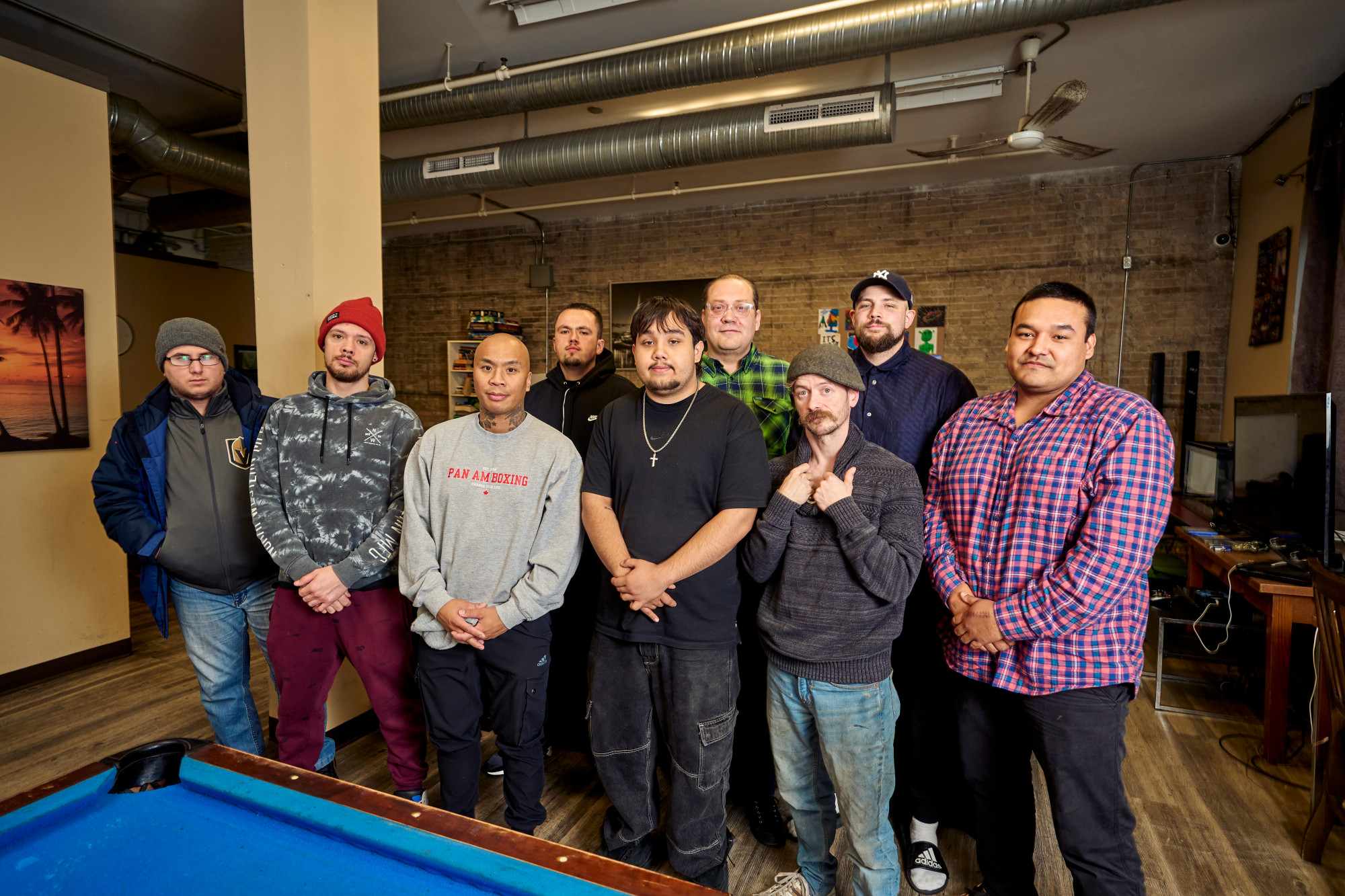
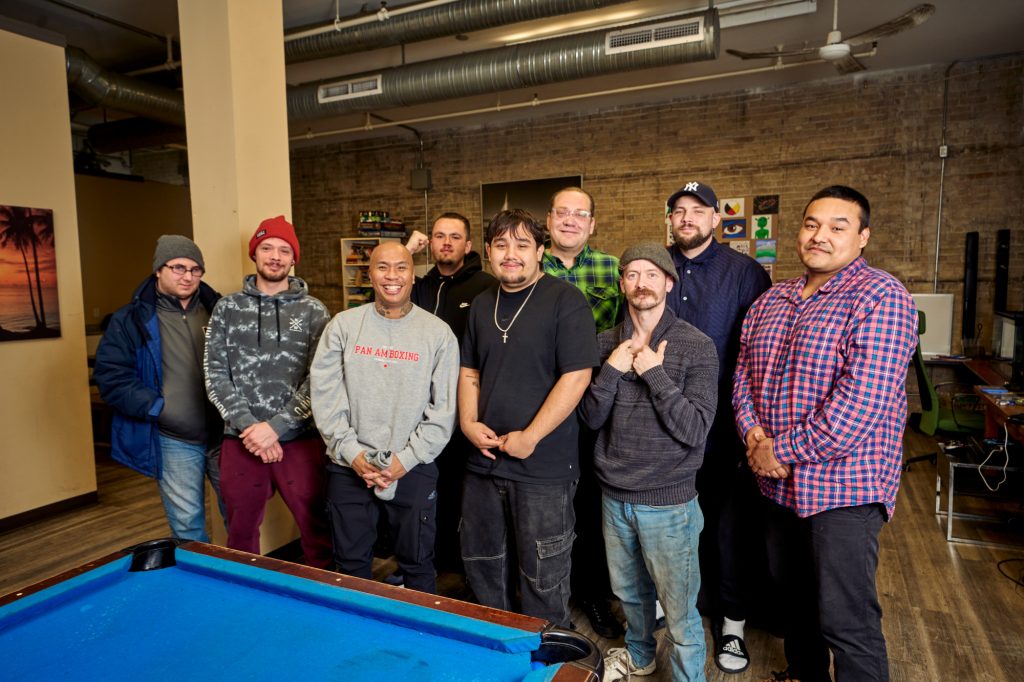
Walk up the stairs at Pan Am Place and the routine becomes visible. In the shared living space, residents play pool, play video games, and spend time together. Next door, the sound of boxing gloves hitting pads carries over from Pan Am Boxing.
That balance of structure and connection is central to Pan Am Place, a second-stage transitional housing program for 22 young men ages 18 to 29 who may otherwise experience homelessness. Residents volunteer in the community, take part in employment and skills training, and commit to a fitness routine through Pan Am Boxing.
Manager Joel Bodner describes the program as “low barrier, but with plenty of boundaries.” He brings both professional experience working in shelters and sober housing, and his own lived experience of recovery to the role.
The goal is not to rush residents through the program, but to give them time to build consistency. “I like to tell them a year,” Bodner says. “Statistically, that first year is the biggest hurdle. Then guys can start thinking about what’s next.”
Boxing is one part of that structure, but learning to fight is not the point.
“We use boxing as a tool for why you’re here,” says Chris Sarifa, a manager and boxing instructor with Pan Am Boxing.
Training gives residents a place to practice discipline, humility, and resilience. “Just like in the ring: you get knocked down,” Sarifa says. “Do you sit there and cry? Get back up.”
For some residents, it can also help build confidence. Bodner recalls men who arrived from abusive backgrounds feeling unable to protect themselves. “Learning to box is empowering,” he says.
The impact can be seen in the milestones residents work toward. Sarifa has watched men find steady employment, reconnect with their children, and move into housing of their own.
Richard Longstreet, who describes himself as one of Pan Am Place’s “original residents,” is approaching one year of sobriety. For him, the program’s greatest strength is the community it creates.
Richard Longstreet, who describes himself as one of Pan Am Place’s “original residents,” is approaching one year of sobriety. For him, the program’s greatest strength is the community it creates.
He says the expectations around accountability, reliability, and respect have also helped him establish a routine that works for him.
Winnipeg Foundation supported Pan Am Place with a $100,000 Community Grant in fall 2025 for Project Fighting Back. The program expands supports for residents through health and nutrition, job-skills training, education and development, and cultural support from Elders and seniors.
Those supports are strengthened by the relationships residents build with staff.
“I’ve always needed mentors in my life,” says resident Jordon Gregorchuk. “I’ve never really had any parental figures or anyone to look up to, and Chris is like a father to me. It’s beautiful.”
For Sarifa and Bodner, that trust is part of helping residents move toward greater stability and independence on their own terms.
Gregorchuk puts it more simply: “This place right here, it saves lives.”
To learn more about Pan Am Place, visit Pan Am Place | Transitional Housing For At-Risk Young Men.
Stories