Many Paths to Financial Empowerment
SEED Winnipeg provides practical financial supports that help Manitobans access benefits, manage money, build businesses, and work toward greater financial security and opportunity.



By: Michel Durand-Wood
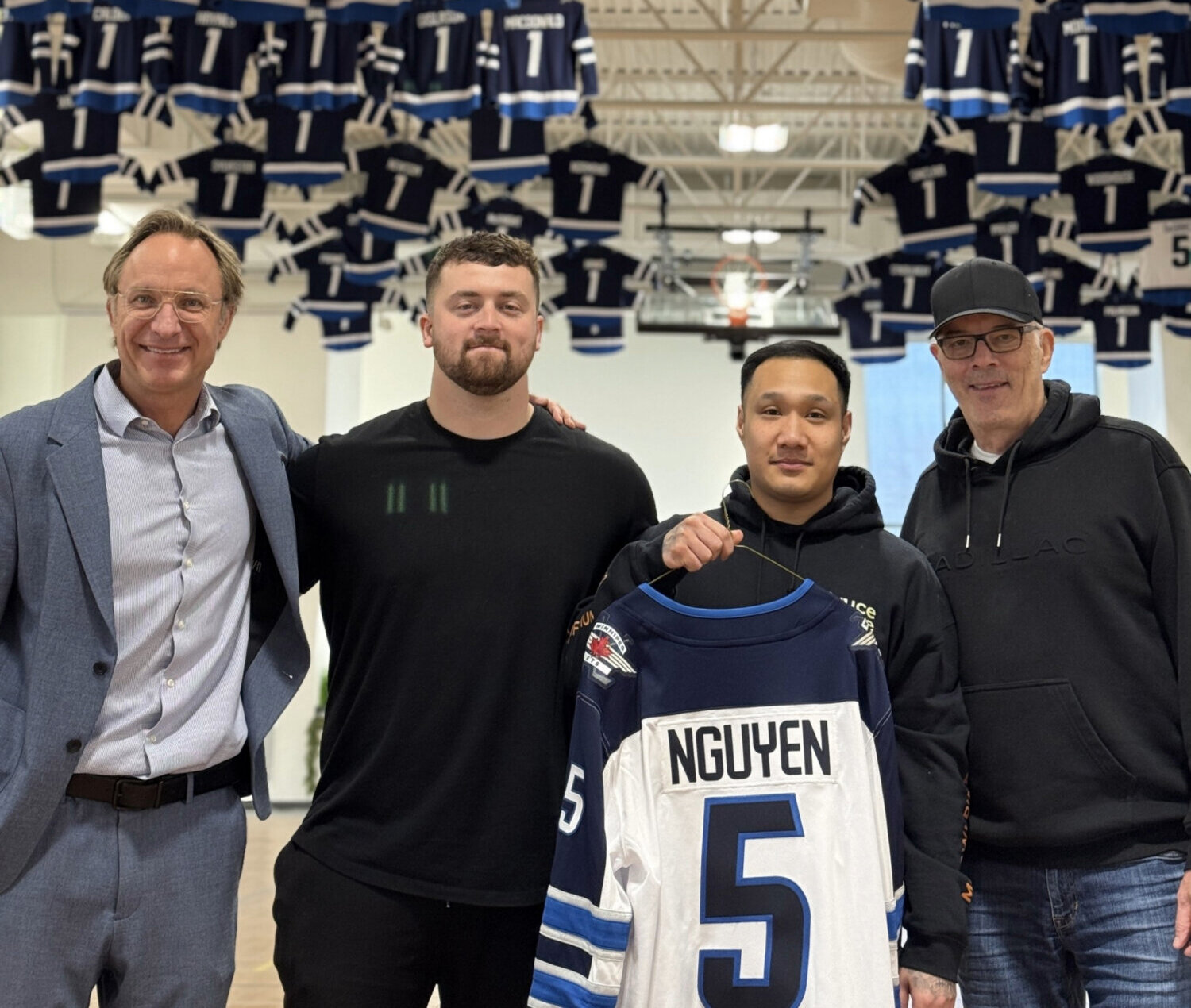
Photo credit: The Bruce and Anne Oake Memorial Foundation
“There’s a graduation here tonight.”
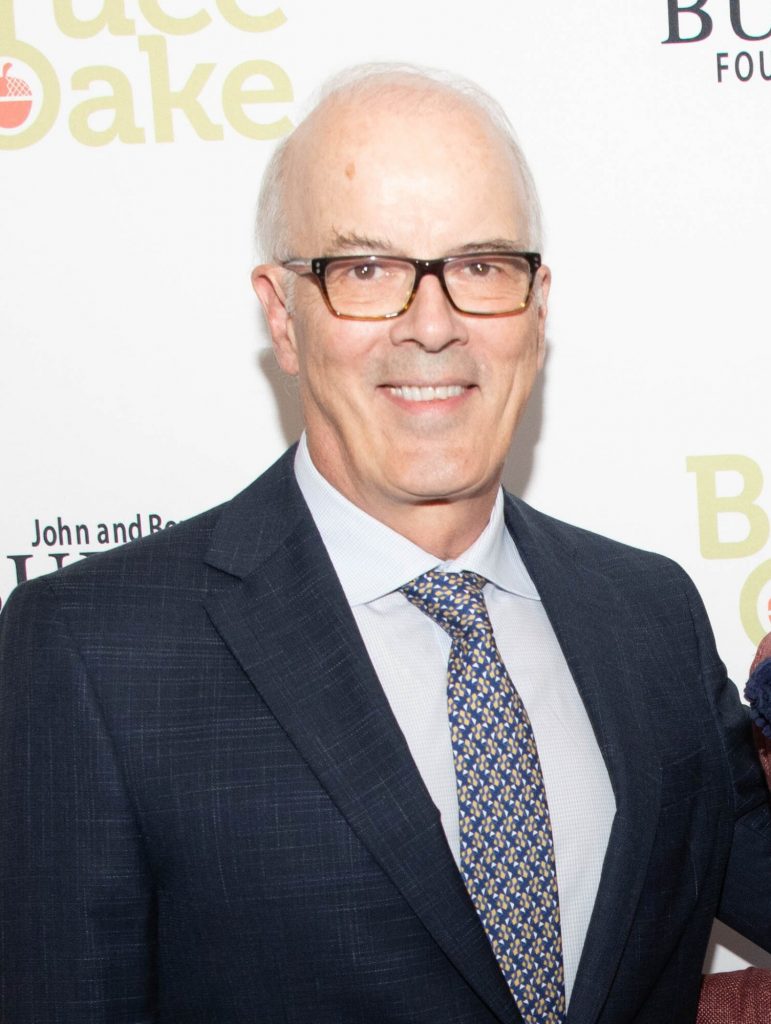
I’m with Scott Oake inside the family room at the Bruce Oake Recovery Centre, a comfortable common area furnished with plush sofas, tables and chairs, and windows with a view to Sturgeon Creek Park. Scott is President and co-founder of the Bruce and Anne Oake Memorial Foundation, the charitable organization that owns and operates the Recovery Centre, and he speaks with the warmth and pride of a father, like he’s talking about his own kids. “Graduations are special. I think there are twelve graduating tonight. They’re actually called Ceremonies of Gratitude because there’s a lot of gratitude expressed on those nights.”
What makes these nights so special is that the ceremonies are as much for the friends and families of the men completing the 16-week in-residence addictions treatment program, as they are for the men themselves. The impacts that addictions have on the family of those battling addiction is well-documented, so recovery is necessarily also about them. That they’re “getting their guy back in good health and good repair,” as Scott puts it, means that family and friends are also entitled to celebrate.
Scott and his late wife Anne’s firstborn son, Bruce, battled addiction for a number of years, which eventually claimed his life in 2011. Bruce had had his most successful year in treatment while staying at Simon House, a nonprofit recovery centre in Calgary, and so, to honour their son’s memory, the Oakes wanted to bring that same concept of long-term treatment at no cost to their hometown of Winnipeg.
From the beginning, the guiding principles at the Bruce Oake Recovery Centre have always been two-fold. The first is the continuum of care, because connection is key in recovery. Success comes from having built relationships and community that continue well beyond the initial stay at the Centre. That’s why when someone graduates, they have a counsellor for life, and alumni are encouraged to come back as often as possible, even to drop in for lunch, or to attend other Ceremonies of Gratitude. And the second is access: no one is turned away because they can’t afford to pay.
And it’s worked. Since the opening of the 43,000 sq ft Bruce Oake Recovery Centre in 2021, over 600 men have graduated in a Ceremony of Gratitude, returning “in good health and good repair” to their friends, families, jobs, and society in general.
It’s hard to overstate how much addictions affects each and every one of us. As Scott relates, “It may not be in your house, but it’s probably somewhere in the family tree, and if it’s not, it’s definitely in your wallet.” He quotes a 2008 homelessness study from Calgary, which estimated that for every person battling addictions that could stay sober for a year, taxpayers would save $138,000 in direct costs. With inflation, “That figure is probably now $200,000.”
In the Bruce Oake Recovery Centre’s gymnasium, there are 180 Jets sweaters hanging, each of them standing for one year of sobriety. “In many cases, those guys have 2-, 3-, 4- and we now have three 5-year sweaters hanging up there,” says Scott. “We can make the claim that Bruce Oake has saved the taxpayer, in the five years it’s been open, as much as $30 million.”
But beyond all that value are the values. Scott speaks highly of the staff here, and in particular Greg Kyllo, the Executive Director. He says they have created a culture of kindness, of love, and most of all, of hope.
And all that success has served as inspiration to build a second facility. “Our pledge was always that when Bruce Oake was up and running, we would turn our attention to women who need recovery just as much as men, and more in some cases, because they’re often the heartbeat of the family, principal caregivers. And that will be the Anne Oake Family Recovery Centre.”
One of the biggest barriers for women is the fear of losing their children if they seek addiction treatment. That makes them reluctant to ask for help, because “no one wants to be chasing their kids through the system the rest of their lives.”
To address that, the Anne Oake Family Recovery Centre will be the first recovery centre of its kind in North America to enable women to have their children with them as they get healthy again. Such a family-centered approach requires more beds, and more services—like a daycare—than you would find in other facilities.
And the same guiding principles will apply at Anne Oake Family Recovery Centre as with the men’s centre, which means ensuring there are no financial barriers to access whatsoever. Scott tells me that full cost-recovery at the men’s centre is approximately $270 per day, but that very few are paying that. The rest is made up through different contracts, gifts, and grants.
“We appreciate every dollar we get,” Scott tells me. “Someone who gives us $50 may have to think long and hard about it… but they believe so dearly in this cause that they’re willing to make that donation. But you can’t establish a facility like the Anne Oake Family Recovery Centre without major gifts.”
One of those major gifts was a $500,000 Major Capital Grant from The Winnipeg Foundation this year, to help build the 65,000 sq ft women’s facility.
“The Winnipeg Foundation support was key in starting up Bruce Oake and has been consistent, and the grants to help get the Anne Oake Family Recovery Centre are critically important,” explains Scott. “Without them, and many others of their kind, we wouldn’t even be talking about construction starting at the end of May.”
Even though they haven’t yet reached their fundraising goal, Scott says that starting construction without having all the money in place is something they did with Bruce Oake, too: “We can’t wait. For every day the Anne Oake Family Recovery Centre is not open, women are dying and families are being torn apart. And that’s just the sad truth.”
He adds, “The community is responding from the heart, the same way they did for Bruce Oake.”
Stories