
Many Paths to Financial Empowerment
SEED Winnipeg provides practical financial supports that help Manitobans access benefits, manage money, build businesses, and work toward greater financial security and opportunity.



By: Beth Schellenberg
Photo Credit: Kyle Thomas / Candace House supplied
Wilma Derksen and I first connected over a video call on a frigid February morning. My immediate impression was one of generosity, with her time, her spirit, and her story. It has been more than forty years since Wilma’s daughter, Candace, went missing on her way home from school.
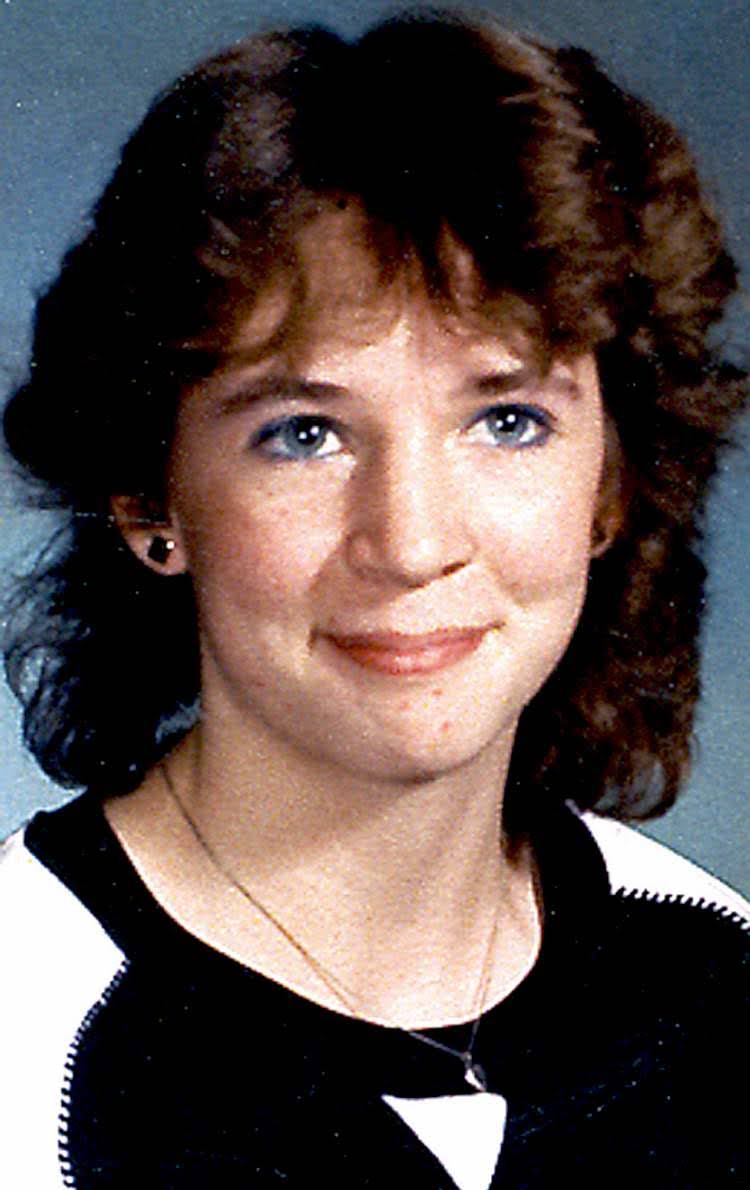
Wilma is animated as she recalls Candace’s playful demeanour, expressive blue eyes, love of swimming and animals, and most of all her magnetic social energy. Candace was, by all accounts, a bright young girl who thrived on human connection and had an open, joyful countenance. She possessed an innate ability to make those around her feel at ease, and with the family moving frequently before settling in Winnipeg’s Elmwood neighbourhood, she made friends everywhere she went.

When Candace was three, Wilma and her husband Cliff moved their growing family to Calgary. Early one morning, Wilma discovered her daughter on the front stoop of their new home, light brown curls flying as she enthusiastically banged away on pots and pans purloined from the kitchen. When asked what on earth she was doing, Candace laughed mischievously, eyes sparkling, and told her mom to wait and see; within minutes, kids from up and down the street descended on the house, drawn in by the clanging racket and delighted to find a vibrant addition to their neighbourhood pack.
Years later, while living in Winnipeg, Wilma discovered, much to her chagrin, that Candace had been sneaking a filthy stray cat into the house and had her two younger sisters, Odia and Syras, in on the scheme. She had taken pity on the poor creature, christened Percy despite being a female, and found a sweetness behind its matted black fur and broken tail, permanently crooked at a 90-degree angle. This was Candace’s nature: gentle but with firm resolve, and a boundless capacity to extend love and care.
The day Candace disappeared was much like any other, although the details of this particular day are seared into Wilma’s memory. Candace left the house for school that morning in a light wool jacket, black with burgundy raglan sleeves, underdressed for the freezing weather, as teens are inclined to be. She was buzzing with excitement about a visit with her best friend, Heidi, who was going to arrive the following morning.
The day Candace disappeared was much like any other, although the details of this particular day are seared into Wilma’s memory. Candace left the house for school that morning in a light wool jacket, black with burgundy raglan sleeves, underdressed for the freezing weather, as teens are inclined to be. She was buzzing with excitement about a visit with her best friend, Heidi, who was going to arrive the following morning.
When Candace didn’t come home from school that afternoon at the usual time, Wilma and Cliff immediately knew something was wrong. Not only was their daughter a happy child with no propensity to run away, but she would never jeopardize the visit with Heidi, an occasion she had been anticipating for weeks. Cliff and Wilma, at this point both alarmed, bundled Odia and Syra into the car that late-November evening and drove through their neighbourhood for hours, first on familiar routes then those less travelled, peering through the foggy windows of the local 7-11, their search complicated by near whiteout conditions and early nightfall. Candace was nowhere to be found.
Upon their arrival home some hours later, Wilma breathlessly opened the front door – had Candace returned while they were out? The house was silent and empty. Cliff and Wilma, at this point beside themselves with worry, began making phone calls, from school officials to numbers scrawled in Candace’s address book, and filed a police report. After they exhausted all the options, Cliff went to bed in the middle of the night. Wilma stayed up until dawn, heart pounding, keeping vigil by the living room window facing the snowy street, hoping, praying, that her girl would materialize. Candace didn’t come home that night.
The following morning, Cliff and Wilma received call after call from community members they had reached out to the night before – any news? – each conversation turning from tentative hope to fearful urgency. After breakfast, the phone rang yet again. This time it was Dave Loewen, the director of Camp Arnes, where Cliff worked at the time. Within hours of that call, Dave mobilized the shock, confusion, and fear into a volunteer search party and had spread word of Candace’s disappearance through Manitoba’s expansive Mennonite community.
As search efforts ramped up over the next few days, the story made its way across the country, in part due to its sensational and tragic nature (a child goes missing on her way home from school – a parent’s worst nightmare), and in part due to the massive city-wide response that followed. Candace’s family and friends, together with complete strangers who were moved by what they had learned about her through stories in the media, combed the streets of Winnipeg in organized search parties sanctioned by the police. Groups of volunteers hung posters featuring Candace’s sixth-grade school photo along with the urgent plea, “Have you seen Candace?” and tip lines overflowed with well-intentioned calls.
Casseroles, platters of dainties, and reams of cards and letters rained down upon a grateful but bereft Wilma and Cliff. The mail, enough to fill multiple boxes, came from parents who had lost their own children, teenagers who identified with Candace, seeing in her their own young lives, and from people who were touched by the Derksen’s story and simply wanted to wish the family well. For those who loved Candace, the public outpouring of support reflected her incredible ability to reach people, to connect, to know and be known.

On January 17, 1985, seven weeks after she disappeared, Candace’s body was found 450 meters from home, bound and tied in an abandoned shed. Police told Cliff and Wilma the case was being treated as first-degree murder. She was thirteen years old when she died.
The two parents drove home from the police station after identifying their daughter’s body, reeling. The word “murder” echoed in their minds, and the specter of trauma loomed large. Both parents knew instinctively it could destroy their lives. That same night, Cliff and Wilma, shattered and unable to go to bed, intentionally chose forgiveness over revenge. Wilma explains that while forgiveness is a key part of Mennonite faith and culture, it was really an act of self-preservation; she and Cliff knew that the horror of losing Candace in such a violent way could crush them.
This decision to choose forgiveness was the first of many the Derksens had to make quickly. Within days of Candace’s body being discovered, the family had to decide what colour of coffin to bury their daughter in, where to hold the service, which the funeral director warned would be too large for their home church, and where people could donate in lieu of flowers.
The answer to this last question came to Wilma almost immediately; Candace was a beautiful swimmer, at ease in the water, a total natural like her dad (the two had loved to frolic in the water together, diving and rolling like twin otters), and Camp Arnes had plans to build a pool. By the time the funeral took place, mere days later, a memorial fund in Candace’s honour was set up to raise money for the camp’s swimming pool. Donations poured in, and Cliff and Wilma saw the possibility of Candace bringing more good into a world she left too soon.
In the decades that followed, Cliff and Wilma became advocates for forgiveness and worked alongside multiple different organizations and programs serving victims of violent crime, sharing how they had survived such a shattering loss, honouring their daughter’s memory, and building her legacy. For families who have suffered a homicide, the loss of a loved one is the first of many traumas, and the statistics around mental health, marriage, and the fallout of homicide are stark. Many, if not most, families will not stay together; their lives will be ravaged by the memories, the trauma, and ongoing interactions with the legal system.
Twenty-two years after Candace’s body was found in that abandoned shed, a suspect was arrested and ultimately found guilty of second-degree murder. Prior to the arrest, the person who killed Candace could have been in line with the Derksen family at the grocery store, riding a city bus, grabbing a coffee; out in the world, surrounded by more potential victims.
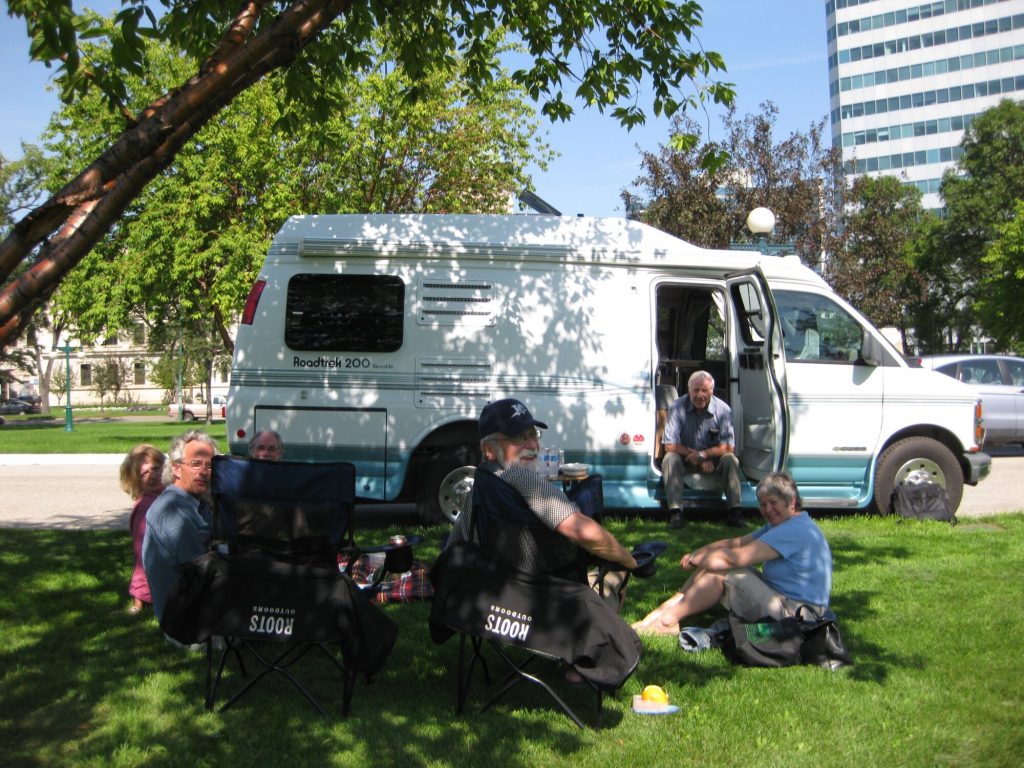
Wilma’s sister drove her RV all the way from Vancouver so the family would have somewhere to spend time downtown while court proceedings were underway. As the Derksen family went through the court process, more than two decades after they lost Candace, and continued to meet and interact with other victims, Wilma began envisioning a safe place, an oasis near the law courts for families who had lost loved ones to violent crime.
The idea for Candace House, a place of refuge, was born. After all, Candace was a people person, she welcomed everyone. What better way to honour her than to have a house, the one she never got to create for herself, to shelter those in need. Candace’s story was, at this point, well known in Manitoba, and other organizations and groups the Derksens had worked with, including men serving time for violent crime, were eager to help bring Wilma’s vision to life.
In 1999, the Derksen family, together with other founders – Victims’ Voice, Stony Mountain Lifers’ Pegasus Association (for men serving life sentences in the Stony Mountain Penitentiary), Lifeline Manitoba, and the John Howard Society of Manitoba – began the planning process and established The Candace Derksen Fund at Winnipeg Foundation. Because the positioning of this house was so intricate, the founders held a provincial consultation and considered many different locations before they found the right spot. In 2018, after nearly a decade of planning and countless hours of volunteer work, Candace House opened its doors and welcomed the first family.

The street-level space is bright and inviting, with sun streaming onto colourful handmade quilts, cozy sectional couches, and a long dining room table. Cecilly Hildebrand, who has been executive director of Candace House since the very beginning, greets me warmly, and it really does feel like I’m being welcomed into someone’s living room. A glimpse of a concrete parkade, barely visible above the privacy screen covering most of the large west-facing window, serves as the sole reminder we are in a commercial building on Kennedy Street in downtown Winnipeg, the law courts a mere half block away.
After a tour of the space, which has several private rooms and two larger open areas equipped with kitchens and dining areas, Cecilly brings me a steaming cup of mint tea. Her passion for the work has been apparent from the minute I stepped in the door, and she brightly expounded on the benefits of a recent expansion as she showed me around, recounting moments where as many as half a dozen families have sought refuge and support through Candace House simultaneously.
Cecilly first met Wilma 15 years ago. She was finishing her undergraduate degree and ended up working with Wilma on a conference presentation about what forgiveness looks like for family survivors of homicide. The two clicked, and shortly after the conference wrapped, Cecilly says she “received a message from Wilma, in that Wilma way, that said, ‘if you’re bored, I might have an idea.’ That’s all that she said! So, we met for coffee, and Wilma explained, ‘Here’s what we want to build, do you want to run it?!’” Cecilly, a self-professed builder brimming with sunny energy alongside a steely resolve, said yes. That fortuitous meeting started a long process of fundraising, planning, research, and development.

Fast forward to today, Wilma’s vision for Candace House is fully realized. The organization provides a space for families to have privacy, nourishment, and rest as they move through an incredibly challenging process, one that can last for many years, and in some cases, like the Derksen family, for decades. Cecilly explains that families are “totally exposed in the process of so much grief and trauma.” In response to this, Cecilly and her staff have worked with the police and province to allow victims to make statements, receive their loved ones’ belongings, attend virtual court, and meet with the Crown, all from Candace House.
Another crucial way Candace House helps families is by alleviating uncertainty and stress on the first day in court. Cecilly explains that instead of referring to the justice system, “We call it a legal system, because you’re not going to find justice here. Your loved one is not coming back, and there is no justice in that.” She explains that the process is, for most, totally unfamiliar, which compounds an already stressful, grief-laden experience. “Families come in the morning and talk about the day with staff, go to court, and then come back at the end of the day and kind of take a deep breath so they can leave at least some of it here and go home without carrying all of the weight.”
Aside from the cruel reality of losing someone in a violent way, there is a high likelihood that the perpetrator is out on bail. Families have run into the person who murdered their loved one in the bathroom at the courthouse, at the Tim Horton’s on a court recess, or at a restaurant nearby while getting lunch. Candace House protects already traumatized families from many things, but perhaps most importantly, it spares them from having to look the person who killed their loved one in the eye while getting a coffee.
Throughout our interview, people move through Candace House. A victim support worker from the province takes a meeting in one room, families come through the front door, and staff return from the courts. The space is incredibly hardworking, the only one of its kind in Canada, an utterly unique place.
As I step out the front door of Candace House, I’m greeted by a rush of traffic, tall buildings cast long shadows on the sidewalk, and people hurry to their next destination; the contrast between the oasis inside and the downtown bustle is stark. I can see, so very clearly, how Candace House can hold people in pain, protect them, even just for a short period of time, from what can be a harsh world.
Stories