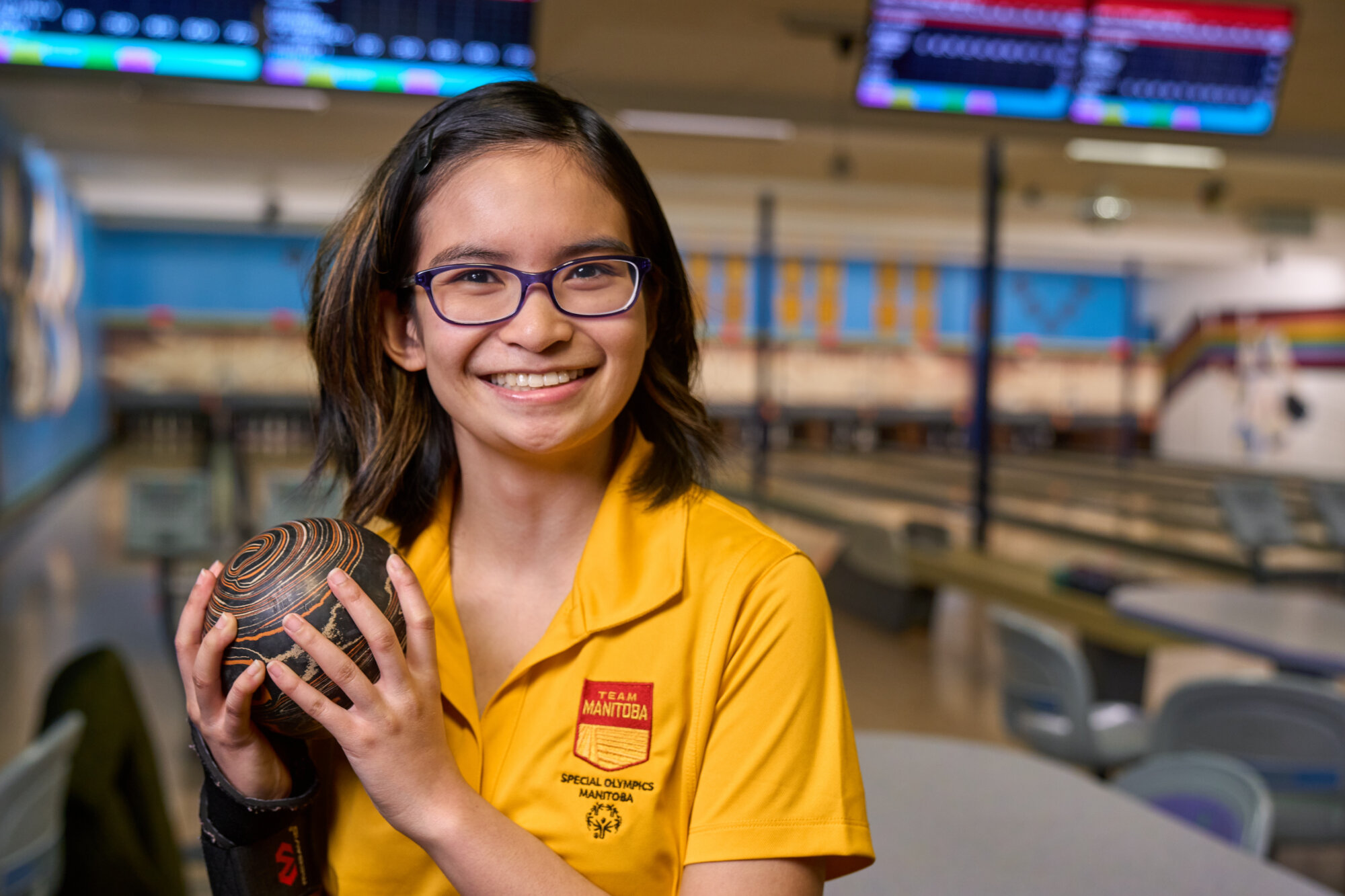
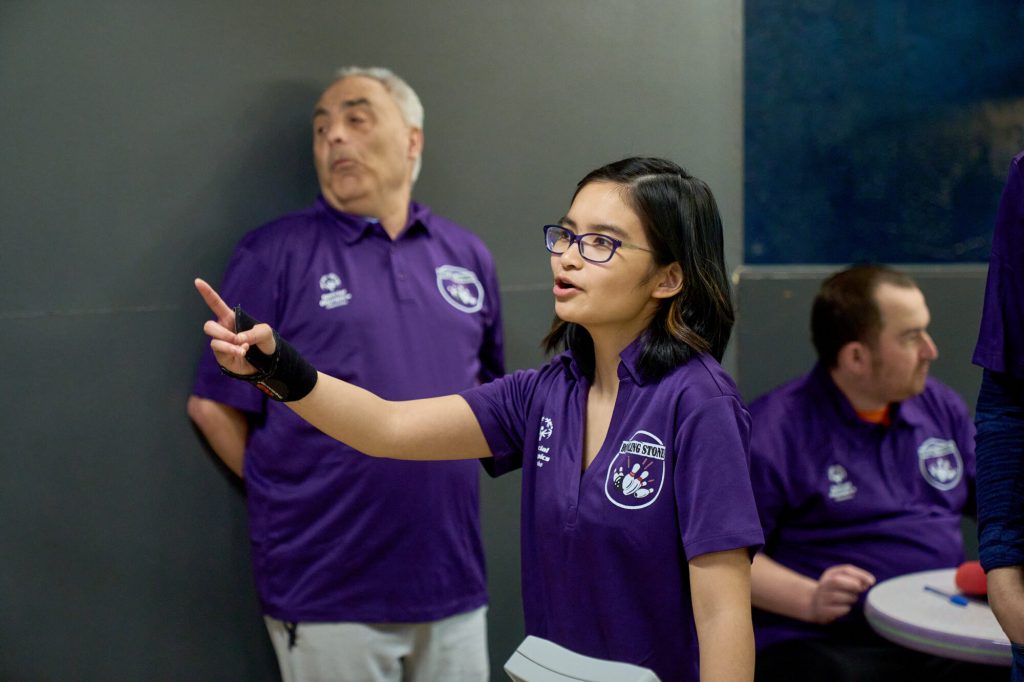
Elizabeth Dela Cruz doesn’t leave many bowling pins standing when she rolls a ball down a lane—and she has a Special Olympics gold medal to prove it. But the chance to win gold isn’t why Dela Cruz, a 22-year-old Winnipegger, first picked up a five-pin bowling ball about four years ago. She did it to meet new friends, stay fit, have fun, and try something new.
“I have lots of bowling friends,” said Dela Cruz, who lives with autism spectrum disorder and pervasive developmental disorder. “I like the people and I feel I’m very good—it’s a fun sport.” Dela Cruz, who won gold in her bowling division at the Special Olympics Canada Winter Games in Calgary in 2024, personifies the decades-old motto for Special Olympics: “Let me win, but if I cannot win, let me be brave in the attempt.”
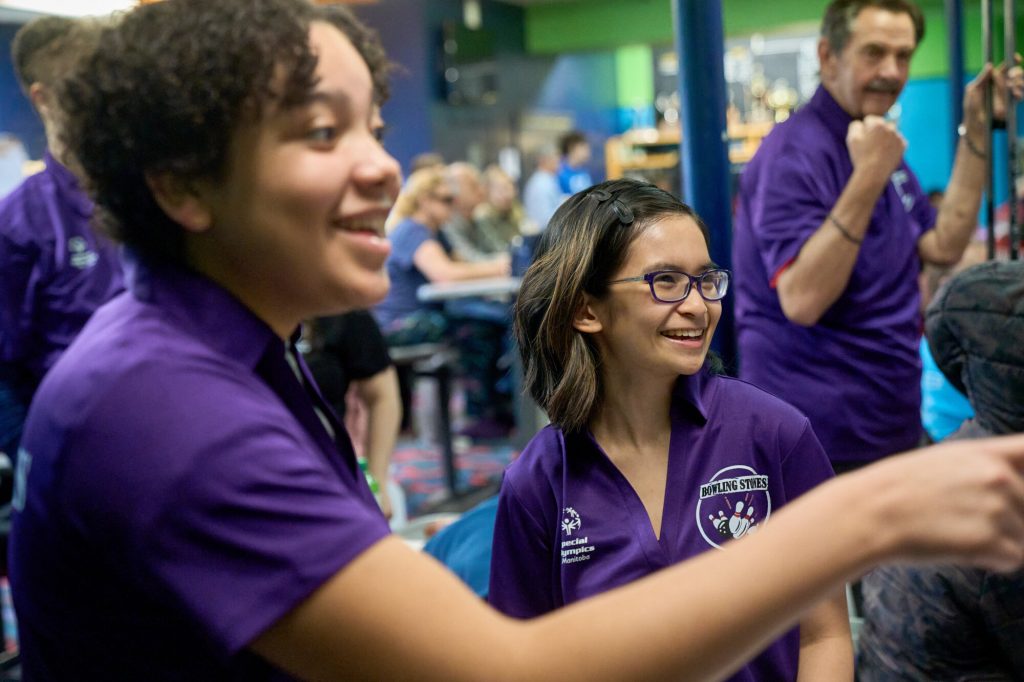
Athletes connect and celebrate together during a Special Olympics Manitoba bowling session.
Dela Cruz, and 236 other bowlers in the city’s Special Olympics program are able to go bowling weekly, from about September to April each year, thanks to a grant from The Winnipeg Foundation. The Foundation provided a $30,000 grant last year to support the organization’s local bowling program.
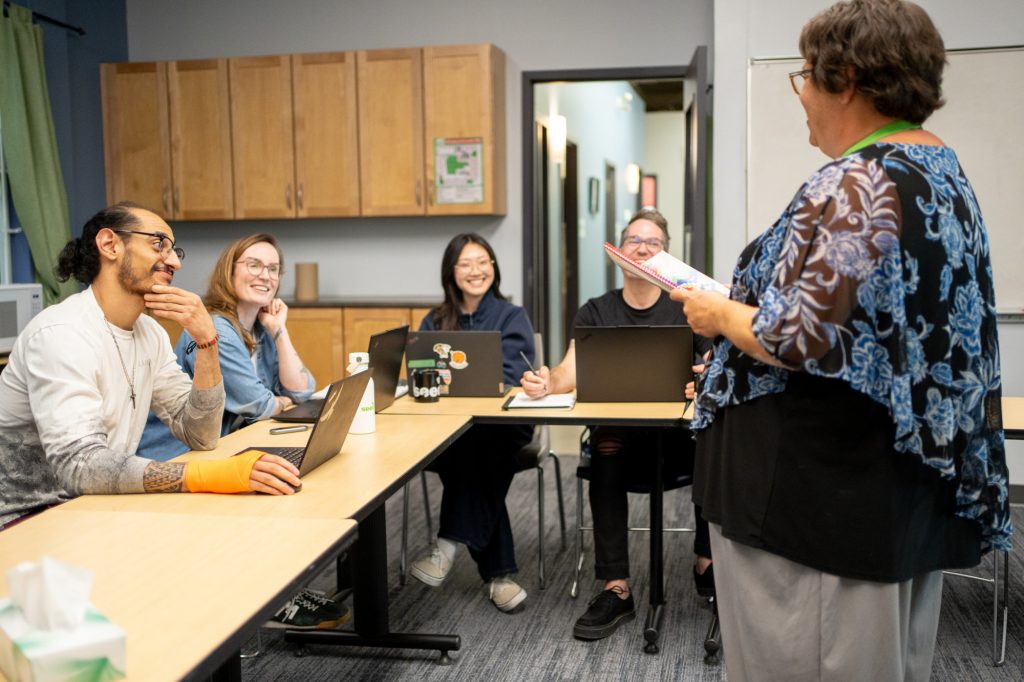
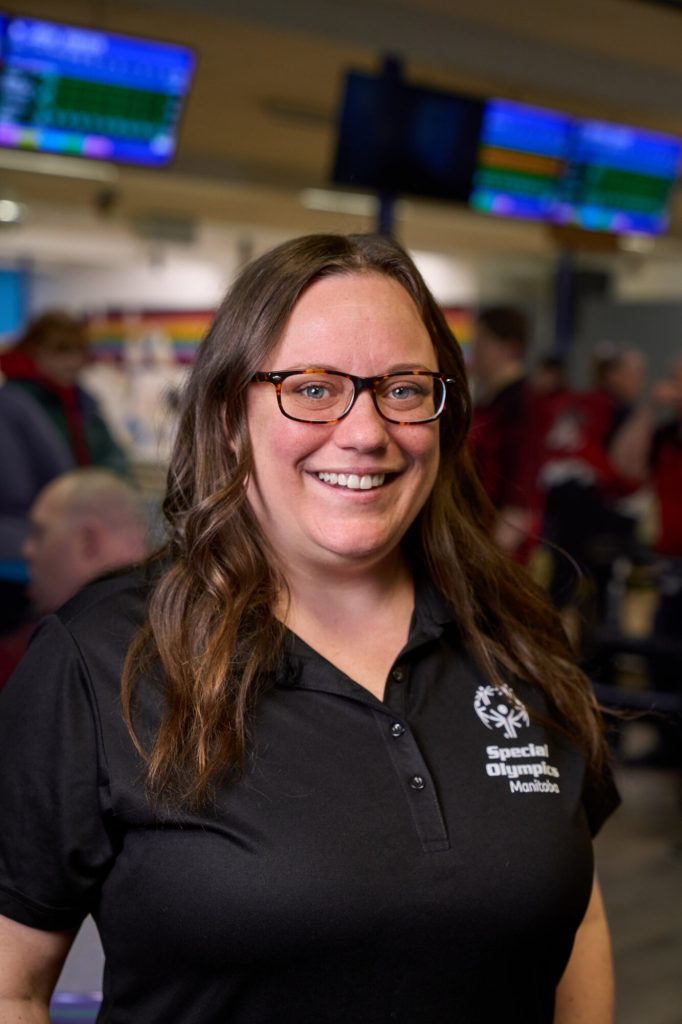
Melissa Suggitt, Special Olympics Manitoba’s director of marketing and communications, said the grant is essential to help cover the costs to rent lanes at bowling alleys and pay for equipment.
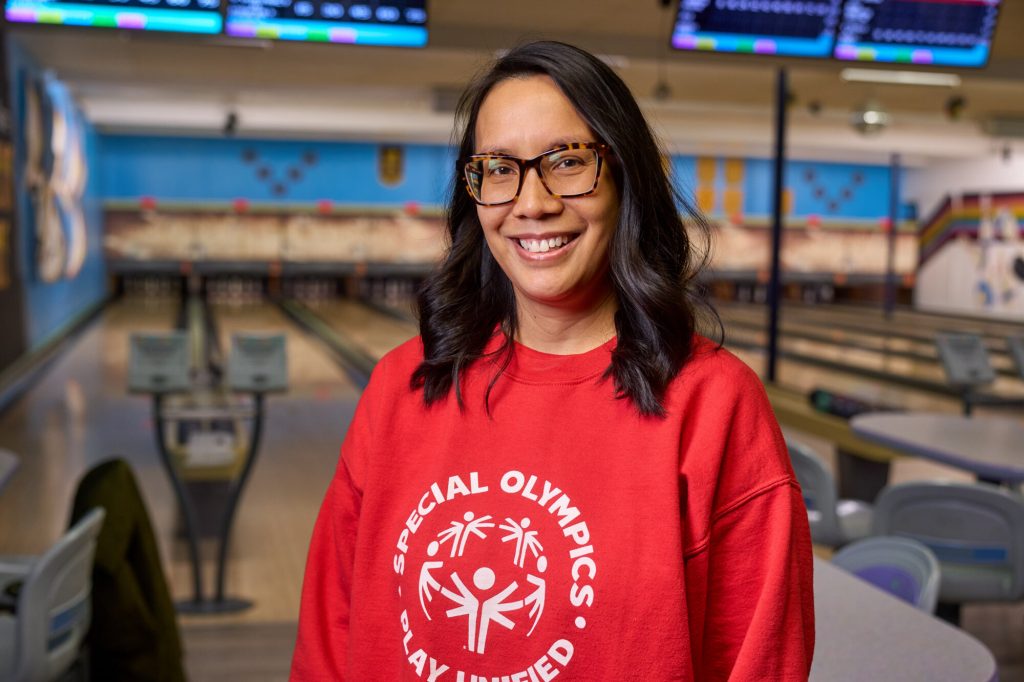
Melissa Suggitt, director of marketing and communications at Special Olympics Manitoba.
“Support from The Winnipeg Foundation is what helps keep financial barriers low to get more athletes into these programs,” Suggitt said. “We are the only non-profit which provides sport programming specifically for people with an intellectual disability, and bowling is one of our higher cost programs to offer.”
Suggitt said Special Olympics Manitoba has been around since 1980 and bowling was one of its original sports. It currently runs 17 five-pin and five tenpin programs, in both competitive and recreational pathways, across the province. She said participation is free for the athletes who range in age from eight to their seventies. “Bowling is one of our most accessible sports,” Suggitt said. “Every age can participate, every skill level, people of all abilities and backgrounds. That’s why it is our most popular sport and we have quite a waiting list. We really do rely on support of the community and foundations, like The Winnipeg Foundation, to help break down those financial barriers.”
Suggitt said competitive tenpin bowlers can work to compete at both national and international Special Olympics, while five-pin athletes go to the Canada games because that sport isn’t as well known in other countries. But Suggitt said bowlers can also come out simply to play and socialize in a fun inclusive environment at a recreational level during the long winter months.
Elizabeth Dela Cruz participates in a bowling session with fellow athletes and coaches nearby.
She said there are many benefits to playing sports. “The athletes are 49 per cent less likely to suffer from depression when compared to their peers with an intellectual disability,” she said.
“You’re seeing that direct mental health benefit, physical health, the social aspect, the community aspect—it really is an impactful, meaningful community that we’ve built here in Winnipeg and across the province. And that’s not done without people like The Winnipeg Foundation believing in us.”
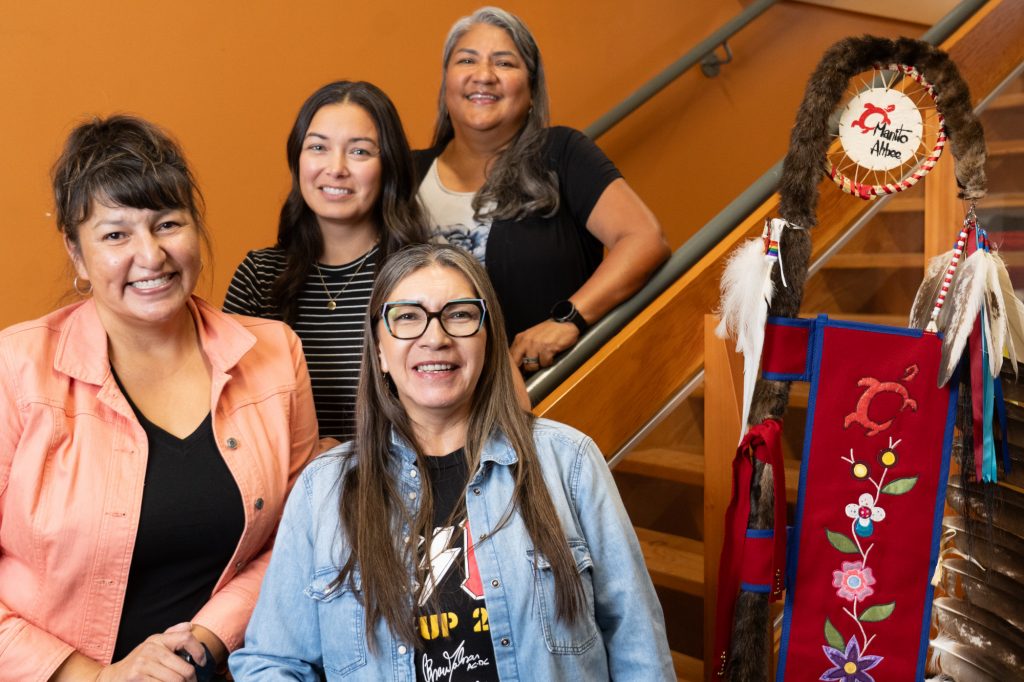
Karen Dela Cruz supports Special Olympics Manitoba programs and athletes.
As for Dela Cruz, her mother Karen says she was not only busy this winter bowling, but she is now taking on another sport—basketball. “That could also lead to a provincial team,” the mother said. “She is going to keep doing her best and being with the community.”
To provide the best experiences, we use technologies like cookies to store and/or access device information. Consenting to these technologies will allow us to process data such as browsing behavior or unique IDs on this site. Not consenting or withdrawing consent, may adversely affect certain features and functions.
Functional
Always active
The technical storage or access is strictly necessary for the legitimate purpose of enabling the use of a specific service explicitly requested by the subscriber or user, or for the sole purpose of carrying out the transmission of a communication over an electronic communications network.
Preferences
The technical storage or access is necessary for the legitimate purpose of storing preferences that are not requested by the subscriber or user.
Statistics
The technical storage or access that is used exclusively for statistical purposes.The technical storage or access that is used exclusively for anonymous statistical purposes. Without a subpoena, voluntary compliance on the part of your Internet Service Provider, or additional records from a third party, information stored or retrieved for this purpose alone cannot usually be used to identify you.
Marketing
The technical storage or access is required to create user profiles to send advertising, or to track the user on a website or across several websites for similar marketing purposes.