Many Paths to Financial Empowerment
SEED Winnipeg provides practical financial supports that help Manitobans access benefits, manage money, build businesses, and work toward greater financial security and opportunity.



In Winnipeg’s North End, a volunteer-run program is proving that hockey can offer kids more than just a sport to play.
The Hockey Education Reaching Out Society, better known as HEROS, has spent more than two decades making sure cost and circumstance don’t prevent kids from playing. For many of them, it’s their first time on skates. For others, it turns into something more: new friendships, a boost in confidence, and a place that feels like they belong.

Since 2000, HEROS has made sure that kids have everything they need: equipment, transportation, ice time, mentorship, even snacks—all at no cost to families. But that’s only part of it. What keeps kids showing up is harder to put a price on. The program is built around creating an environment where young people feel safe and supported.
“Hockey’s conventional structure just doesn’t work for a lot of families,” says Kevin Hodgson, executive director of HEROS, who has been with the organization since 2006 and is based in Calgary.
“A lot of the kids we serve have been told they don’t belong in hockey—or at least made to feel like it. Our job is to create a place where they do.”
The idea goes back to founder and president Norm Flynn, a North End kid who played junior and university hockey and never forgot what the sport did for him. He moved to Vancouver, where he now lives, and started HEROS in the Downtown Eastside with one idea in mind—that other kids deserved the same opportunities hockey gave him. That was more than 20 years ago.
Since then, the program has reached more than 20,000 young people across the country. Today, about 800 kids take part each week. Close to 100 of them are in Winnipeg.
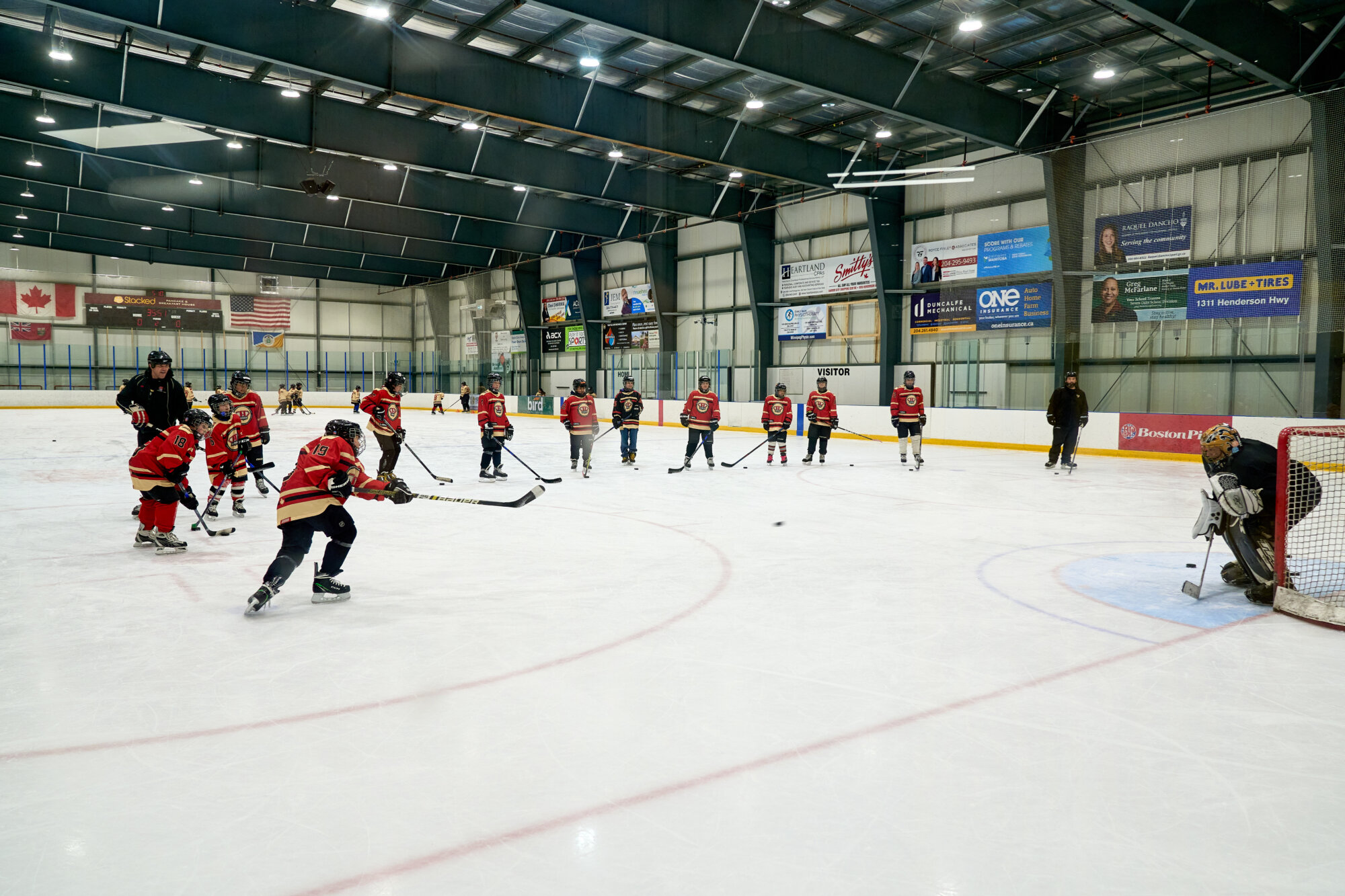
Locally, the program runs out of Seven Oaks Arena and works with youth from ten North End schools. From the moment kids arrive, mentors are there to make sure no one feels lost or out of place.
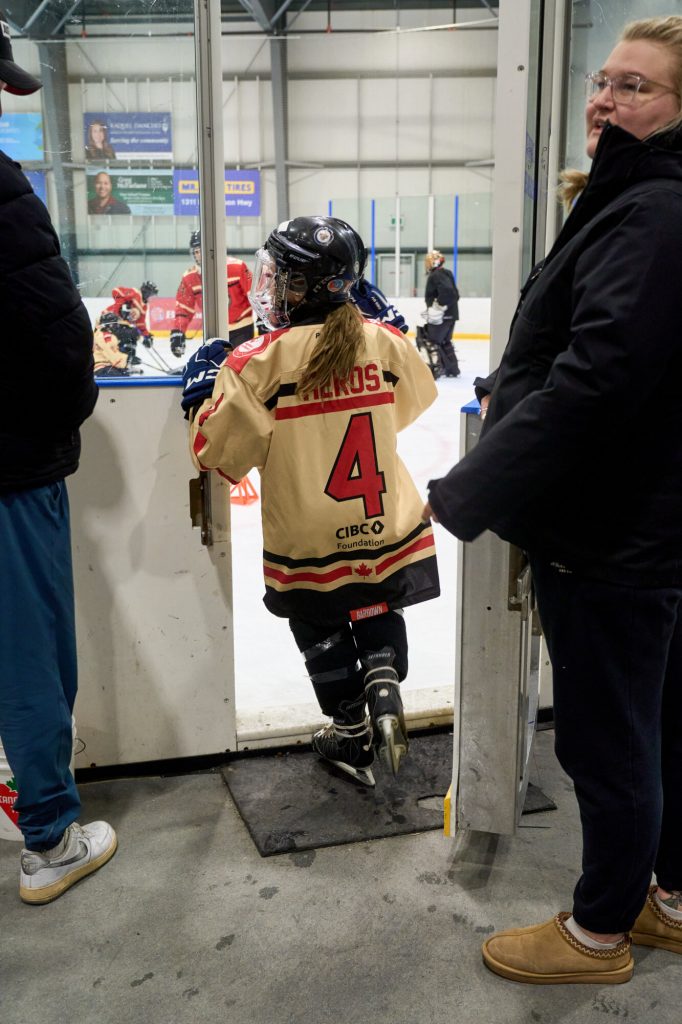
Addisen first got involved in Grade 8, mentoring younger kids and helping them learn how to skate. That was nearly three years ago – and she hasn’t stopped coming back.
“I like skating and I like hanging out with kids,” the 16-year-old says. “So, I figured, why not? And then I just kept at it.”
These days, she’s at the arena every Tuesday afternoon, helping Grade 5 and 6 players get dressed and tie their skates.
“The kids are all so welcoming,” she says. “They want your help and attention. It’s a nice feeling to be needed.”
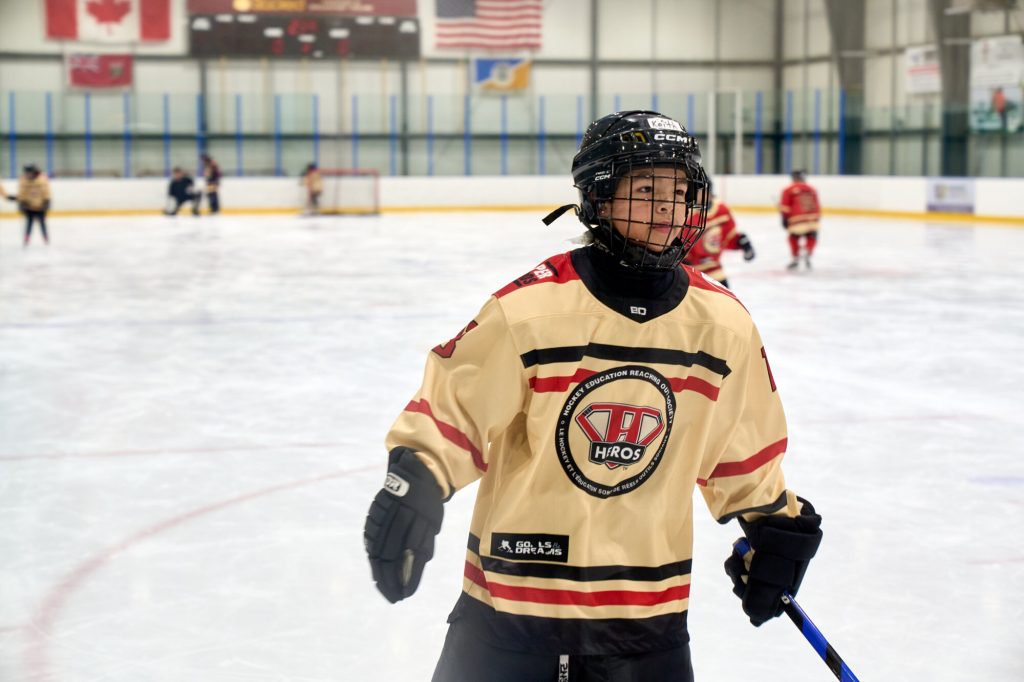
A lot of the kids show up never having been on skates before. By March, those same kids are running drills.
“Seeing that progress is really cool,” she says. “Thinking, ‘I helped with that.’”
But it’s not just the skating that she’s noticed.
“So many kids that don’t go to the same school end up becoming friends.”
Programming runs from October through March and is supported in part by Winnipeg Foundation, which helps to keep participation free for everyone involved.
Without that kind of backing, Hodgson says, none of it would be possible.
“Without ice time, we’re just a good idea,” he says. “The funding helps us cover things like ice, equipment, transportation and insurance—things that make it possible for kids to show up and play.”
Hockey is the hook, but Hodgson will tell you the game is almost secondary. The real measure of success is whether a kid walks out of the arena feeling a little better about themselves than when they walked in.
Volunteers know players by name. They ask how school’s going, how things are at home. What starts as hockey talk can turn into a conversation about homework, trouble with classmates, or other personal challenges.
“If you get to know the person, it’s amazing the athlete they can become,” Hodgson says. “But the focus is getting to know the kids as people.”
Hodgson is also intentional about who the kids see when they walk in. Many of the participants identify as Indigenous, and HEROS is thoughtful about making sure the mentors around them come from the same community. For these kids, it means something to see themselves in the people beside them.
“Our goal isn’t to build diversity for the sake of it,” Hodgson says. “It’s to reflect the community the kids come from, so they see themselves in the people around them.”
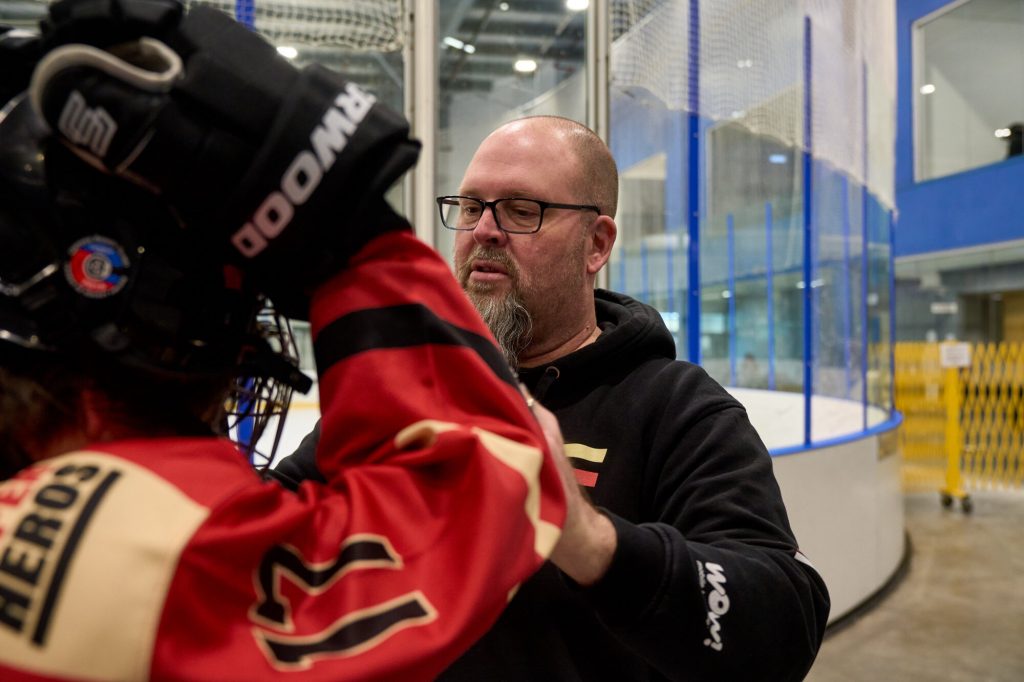
That same thinking carries over into who the program recruits. Rather than pulling in kids who are already doing well, HEROS works with schools to find kids who would benefit most from being there.
“We actually ask the schools for the kids who need us,” Hodgson says. “We’re not looking to reward high achievers. We’re looking for kids who need a place where they feel accepted.”
There’s also different programming depending on age and need. Future Stars is for students in Grades 4 to 8 who are just getting started, before they move into All-Stars. And SuperHEROS serves youth between seven and 17 with cognitive or physical disabilities, adapting the game so everyone can participate.
For a lot of these kids, it’s an opportunity they may not have had otherwise. What they pick up —not just how to skate, but the belief that they can do hard things—stays with them long after the season ends.
“When a kid realizes they can do something they once thought was impossible, every other challenge suddenly feels more achievable,” Hodgson says.
The change shows up on the ice. But beyond that, Hodgson says, it shows up in how they carry themselves.
“We want kids to understand that where they come from doesn’t define where they’re going,” he says.
That’s what the program keeps coming back to—giving kids a place to figure that out for themselves, one stride at a time.
Stories