Many Paths to Financial Empowerment
SEED Winnipeg provides practical financial supports that help Manitobans access benefits, manage money, build businesses, and work toward greater financial security and opportunity.



By: Michel Durand-Wood, Community Booster, Civic Educator, and Author of You’ll Pay for This: How we can afford a great city for everyone, forever.
What if food is more than food? What if food is mental health, family, community, love? What if food is marriage, even?
These were questions I didn’t even know I had until my meeting with Kelly Frazer, the Executive Director of the West Broadway Community Organization (WBCO). It’s a crisp April morning, and Kelly is walking me through the ins-and-outs of the Good Food Club, the neighbourhood food security program they’ve been running for over 20 years.
She’s quick to point out that it’s called a “club” for a reason. Developed by the community, for the community, people felt like “they needed better access to healthy foods… but more than that, they wanted a place where they could feel included, and like they had a sense of ownership,” relates Kelly.
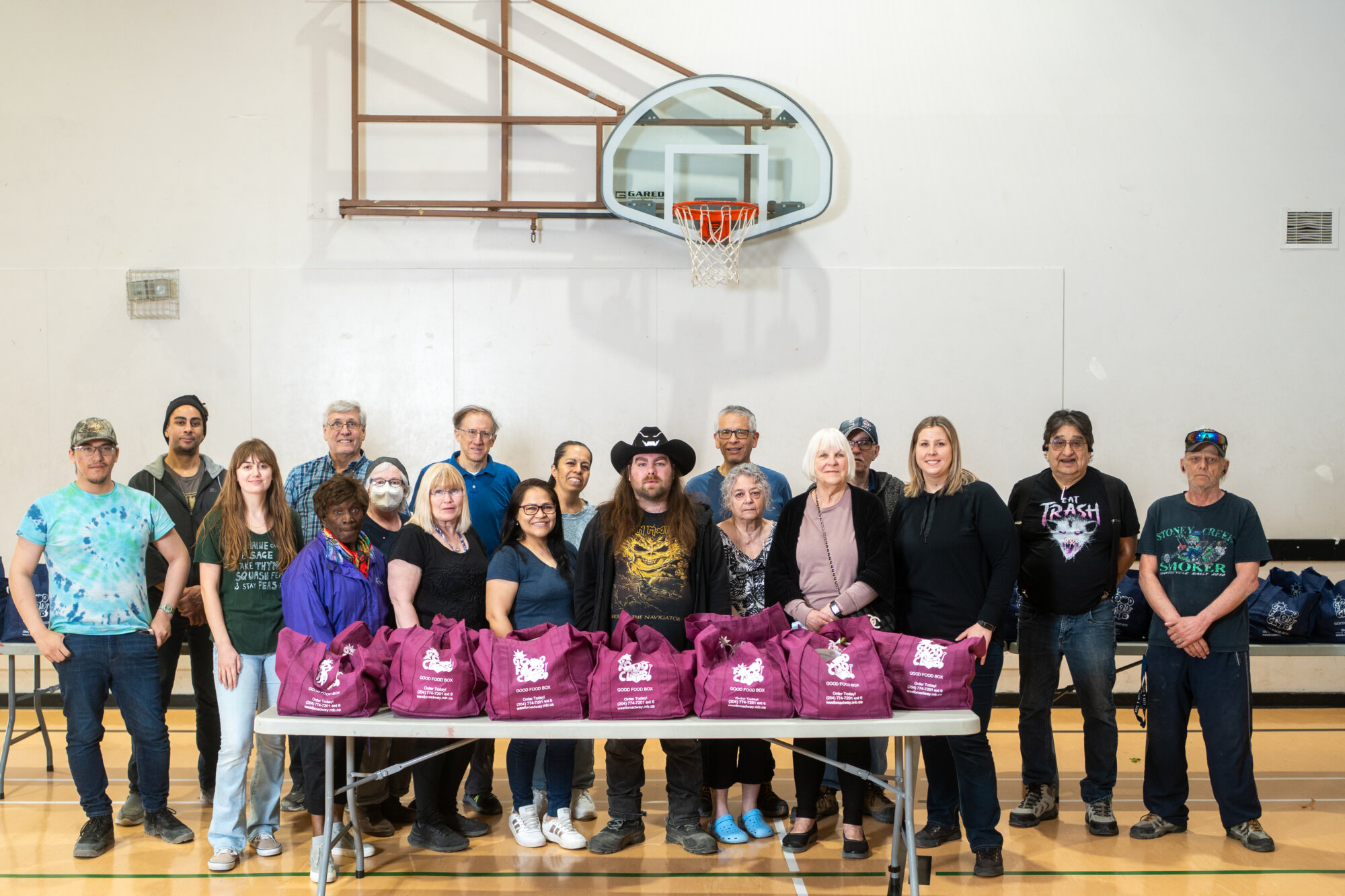
In the last year alone, the Good Food Club distributed 1,341 Good Food Boxes and provided $51,900 in Farmer’s Market Food Currency to people in the neighbourhood. “The need has doubled in the last five years,” explains Ailene Deller, Director of the Good Food Club. “Food prices are going up, all prices are going up… we’re seeing lots of folks, lots of families, newcomers, and especially seniors that are really hurting for that good healthy food.”
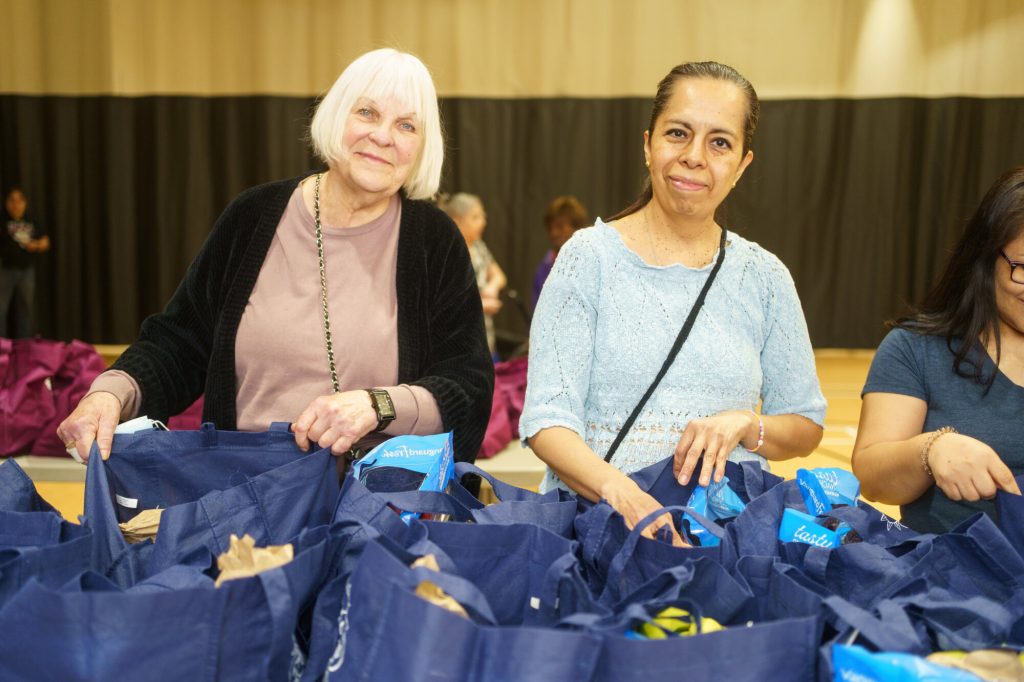
Ailene is one of the Club’s two staff running the program, with significant input and hands-on work from volunteers who collectively provided over 900 hours of their time to the Club last year. “We wouldn’t be able to run Good Food Club without high volunteer involvement,” says Kelly.
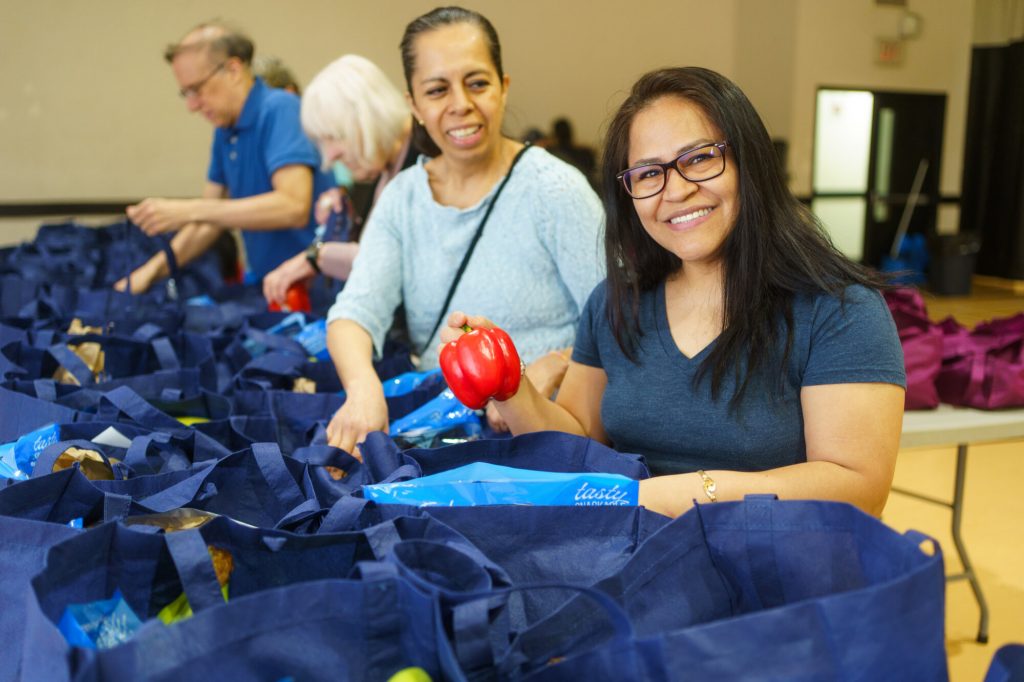
Volunteers earn “sweat points” they can redeem for deep discounts on Good Food Boxes. It’s a system that Kelly says encourages people to get more involved, increases capacity for the program, and gives folks a feeling of ownership. Duties are varied and can include packing and distributing food boxes, setting up for events, and in the summer, helping out at the West Broadway Farmer’s Market, which is entirely set up and taken down by volunteers. The people benefiting from the program are quite literally involved in shaping it, ensuring that it continues to meet the community’s evolving needs.
The “club” format has also given it a much more holistic approach, by looking at everything that goes into our bodies, not just food. Often when talking about mental health supports, the focus is on the services people need once they’re already in crisis. But the Good Food Club aims to provide upstream solutions by answering the question: what do we need to do to keep people healthy so they don’t end up in a crisis?
As Kelly shares, “We’re just looking at all the things that you need to keep your body and your mind healthy.” And that includes access to healthy food, of course, but also things like social connection, mental stimulation, and belonging. It’s why the Club hosts all kinds of different activities, like field trips, to allow people a chance to get to know each other, and build community, which are important for both physical and mental health.
And the connections don’t stop at the individual level either. The WBCO has also long worked with other community groups, such as the Broadway Neighbourhood Centre, Direct Farm Manitoba, the 26 organizations of the West Broadway Directors Network, and Gordon Bell High School.
It’s for Gordon Bell that they received a $25,500 grant from The Winnipeg Foundation, to allow them to work collaboratively on food security, as the school community had noticed a growing need for families there. While the school has a Universal Food Program, providing free breakfast and lunch, they knew that some families were having difficulty accessing food in the evenings, on the weekends, and during the summer.
The collaboration resulted in providing food hampers to families during the school year, but also helped identify a lack of data: the school recognized a need existed but, didn’t have any way of knowing to what extent. So the Good Food Club worked with students on their own food security project: helping to develop an anonymous student survey to assess the school community’s food security needs.
That experience has been really valuable, according to Kelly. Good Food Club members are generally adults, with children being served indirectly. But having the chance for direct input from youth has helped them gain different perspectives. For example, youth didn’t like the idea of asking people if they’re hungry, they wanted different wording. “Youth are really sensitive to the idea that their peers don’t want stigma attached to coming from food-insecure households,” explains Kelly. “They don’t want to shame anyone.”
Ailene agrees. “They’re so great to work with, so smart, so on the ball.” Regarding the survey they’re working on together, she jokes, “They’re going to go through it with us to make sure it’s not too cringey for them.”
While the initiative is for this school year only, the connections that have been made will enable them to continue working together well into the future, deepening those community ties, as the neighbourhood youth eventually become the neighbourhood adults.
Creating relationships is such a key component of the Good Food Club. Often, one of the biggest barriers to eating healthy foods is, if you haven’t grown up eating them, how do you even know how to prepare them? Peer guidance becomes an important piece of the puzzle. The community that’s formed enables the sharing of that knowledge, by trading recipes and cooking or baking tips. But it goes beyond that, to helping out with shovelling or bringing some baking for a neighbour who may have injured their wrist, for example.
“The community members, the volunteers, they really become almost like family. A lot of them are very, very close after years of volunteering together,” says Kelly. “It’s building community, but it’s almost like building family for people.”
Stories